Featured Lendület Researcher: Ádám Lovas-Kiss
Waterbirds play a much more important role in the dispersal of aquatic plants, and even of invertebrate animals, than was previously assumed, as they consume reproductive seeds and other propagules and then excrete them in another small pond. Ádám Lovas-Kiss, research fellow at the Institute of Aquatic Ecology of the HUN–REN Centre for Ecological Research and head of the Momentum Dispersal Ecology Research Group, is studying this process with the support of the Momentum Programme. The importance of his research is further increased by the fact that climate change is causing more and more wetlands to disappear and the condition of aquatic communities to deteriorate.
While still a university student, Lovas-Kiss noticed during a research trip to Italy that certain aquatic plants were present in the Mediterranean ponds that had previously been recorded only in Malta. Together with his supervisor, Attila V. Molnár, he began to wonder how these aquatic plants had ended up in Italy. Since the ponds were frequently visited by waterbirds, the possibility arose that they might be responsible for spreading the plants. The ecologist became so interested in the role of waterbirds in plant dispersal that he has been working on this topic ever since, now with the support of the Momentum Programme, leading his own research group.
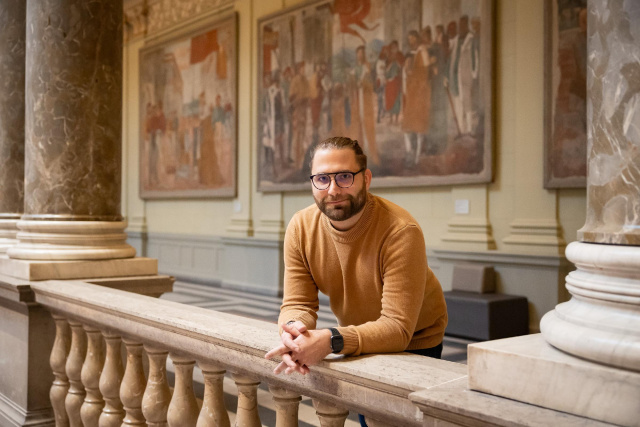 Ádám Lovas-Kiss Photo: Márton Kállai
Soon, he was studying the same phenomenon in Seville with Andy J. Green. “I started my career as a botanist, and that’s how I got into dispersal ecology. Since then, I have been studying not only plants, but also birds and invertebrates,” said Lovas-Kiss. “Among invertebrates, I mainly study bryozoans and sponges, because these can also be transported by waterbirds. During my years in Spain, we studied shorebirds, geese, ducks and other birds, and in almost all cases, we found that these species are indeed capable of spreading plant seeds and tissues, as well as the reproductive structures of invertebrates, in their digestive systems.”
Based on the results of these studies, the topic of the Momentum grant took shape,
focusing primarily on how the ecological crisis caused by climate change and direct human influence affects the dispersal activity of birds.
As a consequence of the transformation of nature, wetlands are becoming increasingly isolated from one another, meaning that many aquatic organisms are no longer able to move between habitats without assistance. As a result, the dispersal role of birds is becoming ever more important, since they can fly and therefore are likely to find suitable wet nesting and feeding sites even if individual ponds dry out or are eliminated by human activity. Waterbirds actively seek out wet habitats and typically excrete the plant and invertebrate propagules (that is, dispersal units) they had previously consumed in these locations. In this way, aquatic organisms have a much greater chance of ending up, after their journey, in habitats that are genuinely suitable for their survival.
Lovas-Kiss and his colleagues have recently been trying to study as many bird species as possible in order to gain a comprehensive picture of the true significance of dispersal carried out by birds. Near Berettyóújfalu, they caught every bird that flew into their nets, ringed them, and did not release them until they had produced droppings (which they collected). The droppings were then analysed, and seeds and eggs were separated from them. These objectives are being further developed in their Momentum research project.
“We are conducting field research in five different habitats. At these sites, we want to catch every waterbird, then take samples from them using standardised methods and determine which propagules of living organisms (plants and animals) they are transporting,” continued the research team leader. “We have already caught more than sixty different species of waterbirds in Andaháza, which is an astonishing number. Our goal is to survey the entire waterbird community.”
They are also researching the microbiome (i.e., the community of microorganisms – bacteria, fungi and viruses) detectable in a bird’s body and examining whether the bird is infected with pathogenic viruses. Their hypothesis is that both the diversity (species richness) of the microbiome and the presence of pathogenic viral infections affect a bird’s capacity for dispersal. For example, a poor intestinal microbiome typically causes diarrhoea. In addition to worsening the bird’s general health, and thus its survival and mobility, this also reduces the chances of successful organism dispersal as the bird simply empties its intestinal contents before it can reach the next small pond or stream.
Within this Momentum research, multi-layered network analysis is used to study the communities of different habitats.
In other words, the community of a given habitat is explored at several levels (or layers) to obtain a comprehensive picture of its overall functioning. The results are used to determine which species are key in terms of organism dispersal (for example, birds that transport the greatest number of plants or invertebrates, and whose disappearance or decline would thus cause the greatest disruption to the functioning of the system). It is not enough for a plant or invertebrate to be transported to another small pond just once, as the survival of genetically healthy populations requires a continuous flow of genes between habitats that are isolated from one another for plants and invertebrates. Otherwise, the local population becomes inbred and deteriorates, becomes more vulnerable, and is more likely to die out following a disturbance. This can be prevented by the continuous replenishment (“genetic refreshment”) that occurs via the digestive system of birds.
In addition to key species, there are also key habitats that play a central role in successful dispersal. “There are habitats that can be extremely important in terms of dispersal because they contain the largest number of birds and the greatest diversity of plants and invertebrates, meaning that plants and invertebrates can spread from there to many other habitats,” said Lovas-Kiss.
“If such a habitat drops out of the system due to human impact, climate change or other factors, it can also drag down the diversity of other habitats.
The habitat itself may not disappear because the water body may remain, but species populations can still collapse and their diversity can become reduced. Alongside the different organisational levels of organisms, this phenomenon is one of the most important issues addressed by the Momentum Programme. Until now, no one has examined in such depth, for example, how the microbiome or an infection affects the community of dispersed species.”
Factors that we might not even think about can also influence the dispersal ability of birds. For example, the physical characteristics of birds – such as the size of their legs and beaks – determine which regions of wetland habitats (e.g., how deep the water is) they are able to feed in, and thus from where they can pick up plant material or invertebrate material for dispersal. The shape and hardness of seeds can also influence which bird species consume them and where they may subsequently carry them.
In addition, the role of tropical-origin mosquitoes, which have been spreading increasingly strongly in Hungary in recent years, may also be significant. These mosquitoes can transmit numerous viruses that infect not only humans but also birds, for example. If a bird becomes ill, its capacity for dispersal is impaired. This Momentum research group is investigating all of these factors.
A témához kapcsolódó cikkeink
_680_454_1764597338_fill_240x160.jpg)
Featured Lendület Researcher: Edit Mátyus
Although quantum electrodynamics is considered a well-established theory in physics, in chemistry – in the world of atoms and molecules – it still raises a number of unresolved questions. Edit Mátyus, Doctor of the Hungarian Academy of Sciences, Professor in the Department of Physical Chemistry at Eötvös Loránd University, and head of the Molecular Quantum Electrodynamics Research Group, and her colleagues are attempting to answer these questions with the support of the Momentum Programme.
Featured Lendület Researcher: Péter Nemes-Incze
Often, the simplest models are needed to understand the most complex laws of nature. This is especially true for interacting electron systems, about which we still know relatively little today because, until now, we have not had access to sufficiently simple model crystals. Despite this, Péter Nemes-Incze, head of the Momentum Topology in Nanostructures Research Group at the Institute of Technical Physics and Materials Science of the HUN–REN Centre for Energy Research, and his colleagues believe that this model could be rhombohedral graphite, which they are investigating with the support of their Momentum grant.
Featured Lendület Researcher: Balázs Lengyel
Nowadays, telecommunications providers and IT companies collect vast amounts of electronic data about us. These databases may contain sensitive personal data, which means they also carry risks, but at the same time they can be an incredibly valuable source of information for the social sciences. Balázs Lengyel, Senior Research Fellow at the Institute of Economics of the HUN-REN Centre for Economic and Regional Studies, and his colleagues are analysing some of this data with the support of the Momentum (Lendület) Programme. The researcher has won a Momentum grant for the second time – now in the advanced category – and is currently researching innovation and inequality in dynamic urban networks.
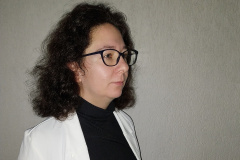
Featured Lendület Researcher: Tekla Etelka Gráczi
Various neurological diseases and conditions often affect a person’s speech. Tekla Etelka Gráczi, Senior Research Fellow at the HUN-REN Research Centre for Linguistics’ Institute for General and Hungarian Linguistics, and her Momentum research group are investigating this effect in subjects with Parkinson’s disease, Down syndrome and multiple sclerosis. Their research examines the acoustic characteristics of spoken sounds and the mechanism of sound production.
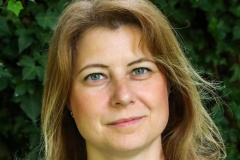
Featured Lendület Researcher: Réka Lukács
Réka Lukács, Senior Research Fellow at the Institute for Geological and Geochemical Research of the HUN-REN Research Centre for Astronomy and Earth Sciences is researching fundamental questions in volcanology with her team, with the support of the Momentum Programme. In addition to its scientific value, their research also has important practical and even disaster management implications, as hundreds of millions of people around the world live near dangerous volcanoes. It is therefore vital that we understand the workings of volcanoes as well as possible, so that our predictive models can become increasingly accurate.

Featured Lendület Researcher: Gergely Harcos
Automorphic forms play an important role in many areas of mathematics, including number theory, geometry, analysis and mathematical physics. Gergely Harcos, Research Professor at the HUN-REN Alfréd Rényi Institute of Mathematics and Head of the Momentum Automorph Research Group, is researching these automorphic forms with the support of the Momentum Programme. According to the researcher, the study of these mathematical objects could even bring us closer to one of the “holy grails” of mathematics, the proof of the Riemann hypothesis.

Featured Lendület Researcher: Péter Kele
Péter Kele, Head of the Organic Chemistry Research Group of the HUN-REN Institute of Organic Chemistry at the HUN-REN Natural Science Research Centre, and his colleagues are developing bioorthogonal functional groups that can “switch on and off” the molecule attached to them in response to light. This can be very useful in the case of active pharmaceutical ingredients, for example, as it may be possible to activate the chemotherapeutic agent only once it has attached to a tumour cell.
_680_454_1749540940_fill_240x160.jpg)
Featured Lendület Researcher: Lajos Vince Kemény
Although curing melanoma is considered a success story in cancer therapy, with immunotherapy playing a central role, there are still patients who do not respond well to treatment. Thus, it is of paramount importance to find immunotherapies to which tumour cells do not become resistant or to which they have more difficulty in becoming resistant. Vince Lajos Kemény, Senior Research Fellow at the Institute of Life Sciences and the Department of Dermatology, Nematology and Dermatological Oncology at Semmelweis University, and his colleagues are searching for therapeutic targets with the support of the Lendület (Momentum) Programme and consider it important to bring their results into everyday clinical practice as soon as possible.
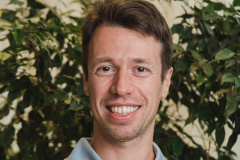
Featured Lendület Researcher: Balázs Hangya
How do the neurons in the lateral septum of the brain, which are important for thinking-related brain function and communicate with each other via acetylcholine, behave? This is the question that Balázs Hangya and his research team, supported by MTA’s Lendület (Momentum) Programme, are trying to answer. In addition to the function of nerve cells, the researchers are also investigating their role in the development of Alzheimer’s disease.
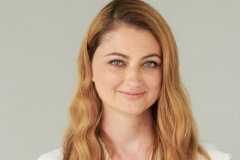
Featured Lendület Researcher: Zsuzsa Bagoly
Literally every minute counts in the effective treatment of a stroke, as the oxygen-deprived areas of the brain start to die immediately. The crisis is most often caused by a blood clot, which is either dissolved by medication or mechanically pulled out of the vessel. However, clot dissolution can have serious side effects, and doctors currently have no quick test to decide on the most appropriate treatment. Zsuzsa Bagoly, Associate Professor in the Division of Clinical Laboratory Science at the University of Debrecen’s Institute of Laboratory Medicine, is working to develop such a test with the support of the Momentum Programme, and the results will be useful in patient care almost immediately.
_680_454_1733819474_fill_240x160.jpg)
Featured Lendület Researcher: Gábor Czakó
Theoretical chemistry has now moved out of the shadow of experimental chemistry and has become an exploratory science in its own right. Gábor Czakó, Associate Professor and Doctor of the Hungarian Academy of Sciences and head of the Research Group on Theoretical Reaction Dynamics of the Department of Physical Chemistry and Materials Science at the University of Szeged, argues that it is often the case nowadays that if the experimental and calculated results do not match, then there is something wrong with the experiments. The Momentum research group he leads is trying to unravel the molecular and atomic mechanisms of the most fundamental organic chemical reactions using mathematical methods.

Featured Lendület Researcher: Márton Bene
The rise of social media, amongst other phenomena, has created a completely new situation in political communication. This may also affect the functioning of political representation, which many political scientists believe has been in crisis in many democracies in recent decades. Márton Bene, Senior Research Fellow at the Institute for Political Science of the Centre for Social Sciences and head of the Momentum research group on Political Representation in the Age of Social Media, and his colleagues are therefore investigating the impact of social media. These effects may not only be at the level of the electorate, but may also influence the messages politicians send.
Featured Lendület Researcher: Csaba Bödör
Tumours, including tumours of the haematopoietic organs, continue to kill many people, so research into them, whether exploratory research or knowledge that can be used in treatment, is a priority. Csaba Bödör, Professor and Deputy Director of the Institute of Pathology and Experimental Cancer Research at Semmelweis University, and Head of the Molecular Oncohematology Momentum Research Group, has been investigating haematological tumours for more than a decade. The work of the research group is being continued with the help of the Momentum grant, and their results are likely to have immediate applications in patient care.