Featured Lendület Researcher: Balázs Lengyel
Nowadays, telecommunications providers and IT companies collect vast amounts of electronic data about us. These databases may contain sensitive personal data, which means they also carry risks, but at the same time they can be an incredibly valuable source of information for the social sciences. Balázs Lengyel, Senior Research Fellow at the Institute of Economics of the HUN-REN Centre for Economic and Regional Studies, and his colleagues are analysing some of this data with the support of the Momentum (Lendület) Programme. The researcher has won a Momentum grant for the second time – now in the advanced category – and is currently researching innovation and inequality in dynamic urban networks.
Lengyel has been working as a network analyst for more than ten years, and his research was partly based on the fact that he and his colleagues had access to the database of the much-liked iWiW social network, which was invaluable for mapping out networks of connections. (For the benefit of younger readers: WiW, and later iWiW, was by far the most popular social network in Hungary in the pre-Facebook era, and for years it was also the most visited website. However, it was unable to compete with Facebook in the long run and ceased operations in 2014.)
Relationship networks and development
“I analysed the geography of iWiW from many angles, which is interesting because the iWiW network pretty much described the country’s social network ten years ago. We examined the spatial structure of relationships, the networks of connections within and between cities, and how iWiW spread across Hungary,” said research team leader Lengyel. “We also examined the connections between this network and social phenomena (such as corruption and income inequality).”
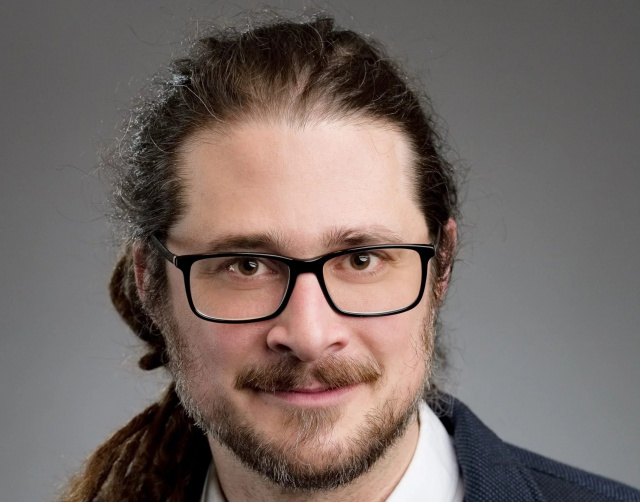 Balázs Lengyel Photo: kti.krtk.hu
According to the research group leader, the analysis of iWiW gave him a big boost in his later research to examine the geographical aspects of social networks in greater depth. He had already addressed this issue in his previous Momentum grant, and the main questions of his current advanced grant also focus on how interpersonal networks explain the economic and technological development of cities and regions. According to the researchers’ hypothesis, the flow of information is most effective in an urban environment, which is why cities have become the engines of technological and economic development, where innovation is strongest.
“At the same time, communication between city dwellers is not automatic. We don’t talk to everyone we meet on the tram; communication interactions take place in networks,” the researcher continued. “This is how we exchange information and knowledge with each other. I study networks to better understand how this information transfer works.”
Network analysis provides an excellent methodological framework for this research, as networks formed by close or loose connections can explain why information flows are fast and efficient or slow. The research team previously found that if a social network is fragmented, that is, divided into fairly isolated groups, and if, for example, the advantages enjoyed by the networks of the rich do not reach the networks of the poor, then social inequalities will increase.
Networks not only convey information, but also provide their members with a number of other benefits, which we collectively refer to as social capital.
In an earlier study, Lengyel and his colleagues found that if connections and bridges can be built amongst previously fragmented groups (such as communities of professional fields), this offers great potential which can lead to significant innovations.
Bridges and mobility
“The current, advanced Momentum grant is built around this basic phenomenon, that is, the bridges built between groups in a polarised social network, and we will examine the issue from a number of angles,” said Lengyel. “The first aspect is the process of information transfer, the dynamics of communication, and their potential obstacles. Our question is whether it is helpful in an urban environment for people to be physically close to each other. Is it easier for people who are in the same physical space to form relationships? In theory, personal encounters significantly facilitate communication. Therefore, we will also examine the movement of people between and within cities.”
In addition, another important area of research in the coming years will be the network of scientific and developer collaborations within and across cities. This will mainly involve Hungarian software development companies, with a particular emphasis on examining cooperation amongst programmers. However, the research will also have an international dimension: various online social networks, databases and user data from mobile communications companies, for example, offer an inexhaustible source of information on social networks. For this reason, the Momentum researchers will examine the mobility of people in European and American cities – and these trends will also be supplemented by patterns of connections on Twitter (now known as X).
As it turns out, this research relies largely on data that is accessible to anyone (if, for example, it is based on the use of open source software or patents or scientific publications). At the same time, the analysis of mobile phone or social media data is also significant in the research, which typically have to be requested from the owners of the data (for example, telecommunications and web companies). One criticism that can be levelled at these studies is that they only capture people who use electronic devices, whether they be apps or physical devices such as mobile phones. Researchers are, of course, aware of this and always take this uncertainty and potential bias into account in their studies.
“This problem needs to be addressed, as studies based on mobile phone use obviously exclude those who do not have a mobile phone. This means that the poorest groups in society may be left out of these studies,” admitted Lengyel. “At the same time, we find that mobility data derived from mobile phones, for example, is a good representation of the urban population.”
Of course, this data may include a lot of sensitive personal information, which is why researchers pay the utmost attention to data protection. The most sensitive data can only be analysed in the secure rooms of the HUN-REN Centre for Economic and Regional Studies Data Bank, and nothing can be taken out of the facility. “We take the protection of personal data very seriously. Our research is never aimed at identifying individuals; data that can be linked to individuals is of no interest to us.
We look for general social connections
and, based on these, we try to tell stories from which we can all learn,” said Lengyel.
A témához kapcsolódó cikkeink
Featured Lendület Researcher: Réka Lukács
Réka Lukács, Senior Research Fellow at the Institute for Geological and Geochemical Research of the HUN-REN Research Centre for Astronomy and Earth Sciences is researching fundamental questions in volcanology with her team, with the support of the Momentum Programme. In addition to its scientific value, their research also has important practical and even disaster management implications, as hundreds of millions of people around the world live near dangerous volcanoes. It is therefore vital that we understand the workings of volcanoes as well as possible, so that our predictive models can become increasingly accurate.
Featured Lendület Researcher: Gergely Harcos
Automorphic forms play an important role in many areas of mathematics, including number theory, geometry, analysis and mathematical physics. Gergely Harcos, Research Professor at the HUN-REN Alfréd Rényi Institute of Mathematics and Head of the Momentum Automorph Research Group, is researching these automorphic forms with the support of the Momentum Programme. According to the researcher, the study of these mathematical objects could even bring us closer to one of the “holy grails” of mathematics, the proof of the Riemann hypothesis.

Featured Lendület Researcher: Péter Kele
Péter Kele, Head of the Organic Chemistry Research Group of the HUN-REN Institute of Organic Chemistry at the HUN-REN Natural Science Research Centre, and his colleagues are developing bioorthogonal functional groups that can “switch on and off” the molecule attached to them in response to light. This can be very useful in the case of active pharmaceutical ingredients, for example, as it may be possible to activate the chemotherapeutic agent only once it has attached to a tumour cell.
_680_454_1749540940_fill_240x160.jpg)
Featured Lendület Researcher: Lajos Vince Kemény
Although curing melanoma is considered a success story in cancer therapy, with immunotherapy playing a central role, there are still patients who do not respond well to treatment. Thus, it is of paramount importance to find immunotherapies to which tumour cells do not become resistant or to which they have more difficulty in becoming resistant. Vince Lajos Kemény, Senior Research Fellow at the Institute of Life Sciences and the Department of Dermatology, Nematology and Dermatological Oncology at Semmelweis University, and his colleagues are searching for therapeutic targets with the support of the Lendület (Momentum) Programme and consider it important to bring their results into everyday clinical practice as soon as possible.
Featured Lendület Researcher: Balázs Hangya
How do the neurons in the lateral septum of the brain, which are important for thinking-related brain function and communicate with each other via acetylcholine, behave? This is the question that Balázs Hangya and his research team, supported by MTA’s Lendület (Momentum) Programme, are trying to answer. In addition to the function of nerve cells, the researchers are also investigating their role in the development of Alzheimer’s disease.
Featured Lendület Researcher: Zsuzsa Bagoly
Literally every minute counts in the effective treatment of a stroke, as the oxygen-deprived areas of the brain start to die immediately. The crisis is most often caused by a blood clot, which is either dissolved by medication or mechanically pulled out of the vessel. However, clot dissolution can have serious side effects, and doctors currently have no quick test to decide on the most appropriate treatment. Zsuzsa Bagoly, Associate Professor in the Division of Clinical Laboratory Science at the University of Debrecen’s Institute of Laboratory Medicine, is working to develop such a test with the support of the Momentum Programme, and the results will be useful in patient care almost immediately.
_680_454_1733819474_fill_240x160.jpg)
Featured Lendület Researcher: Gábor Czakó
Theoretical chemistry has now moved out of the shadow of experimental chemistry and has become an exploratory science in its own right. Gábor Czakó, Associate Professor and Doctor of the Hungarian Academy of Sciences and head of the Research Group on Theoretical Reaction Dynamics of the Department of Physical Chemistry and Materials Science at the University of Szeged, argues that it is often the case nowadays that if the experimental and calculated results do not match, then there is something wrong with the experiments. The Momentum research group he leads is trying to unravel the molecular and atomic mechanisms of the most fundamental organic chemical reactions using mathematical methods.

Featured Lendület Researcher: Márton Bene
The rise of social media, amongst other phenomena, has created a completely new situation in political communication. This may also affect the functioning of political representation, which many political scientists believe has been in crisis in many democracies in recent decades. Márton Bene, Senior Research Fellow at the Institute for Political Science of the Centre for Social Sciences and head of the Momentum research group on Political Representation in the Age of Social Media, and his colleagues are therefore investigating the impact of social media. These effects may not only be at the level of the electorate, but may also influence the messages politicians send.
Featured Lendület Researcher: Csaba Bödör
Tumours, including tumours of the haematopoietic organs, continue to kill many people, so research into them, whether exploratory research or knowledge that can be used in treatment, is a priority. Csaba Bödör, Professor and Deputy Director of the Institute of Pathology and Experimental Cancer Research at Semmelweis University, and Head of the Molecular Oncohematology Momentum Research Group, has been investigating haematological tumours for more than a decade. The work of the research group is being continued with the help of the Momentum grant, and their results are likely to have immediate applications in patient care.