


Featured Lendület Researcher: Edit Mátyus
Although quantum electrodynamics is considered a well-established theory in physics, in chemistry – in the world of atoms and molecules – it still raises a number of unresolved questions. Edit Mátyus, Doctor of the Hungarian Academy of Sciences, Professor in the Department of Physical Chemistry at Eötvös Loránd University, and head of the Molecular Quantum Electrodynamics Research Group, and her colleagues are attempting to answer these questions with the support of the Momentum Programme.
In their research, Mátyus and her research group apply the methods and approaches of relativistic quantum electrodynamics (QED) to molecular systems. According to the research group leader, although physicists believe that the theory reached its peak in the middle of the last century and has since become well established, it can still be useful in studying a number of unsolved problems in the field of atomic and molecular systems. “I am a chemist, and I am really interested in atoms and molecules. I have come to realise that although QED is considered a fully developed theory in physical terms, we cannot currently apply it to the molecular domain,” said Mátyus. “At the same time, we are seeing more and more relativistic “effects” in molecular experiments. Currently, we can make statements and perform calculations about atoms and molecules using a non-relativistic approach within the framework of Schrödinger’s equation, but we do not know how to go beyond this non-relativistic approach.”
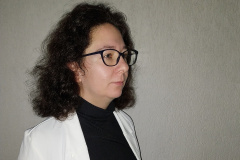
_fit_640x10000.jpg) Mátyus Edit
Mátyus EditPhoto: ttk.elte.hu
According to the researcher, the field of quantum chemistry has accumulated a vast body of knowledge, and its methods are routinely used by experimental and theoretical research groups around the world. Until recently, however, most quantum chemists have maintained that, even if there are relativistic or even QED effects in this field, their significance is generally negligible. However, more and more experimental results are emerging that refute this belief,
as they show that these effects do indeed play an important role in understanding the behaviour of molecules.
In the case of compounds of elements in the lower rows of the periodic table, there is now a consensus that relativistic effects must be taken into account in order to interpret their behaviour.
Is there a wave equation beyond the Schrödinger equation?
“If I had to sum up the most important question investigated by our Momentum research group, it would be: ‘Is there a wave equation beyond the Schrödinger equation?’”, said Mátyus. “We are looking for an equation (approximate and systematically improvable) that is compatible with the physics of the 1950s and can also be used for atomic and molecular systems, building on the tools of quantum chemistry.”
The researcher first encountered this problem, which falls within the scope of relativistic quantum mechanics and relativistic quantum chemistry, more than a decade and a half ago, and has been searching ever since for an equation that is as robust as the Schrödinger equation and can be used to develop (approximate) computer algorithms to answer various chemical questions. “There was a time when I began to think that such an equation might not exist, but in the last few years we have found evidence that it might exist after all, so now we have some leads that my research group and I can follow,” the chemist continued. “Our research is based on relativistic QED, but it is important to us that our results and the methodology we have developed remain compatible with applied quantum chemistry. Ultimately, we are developing equations and computer algorithms that will provide results comparable to experimental (initially spectroscopic) results.”
This will be the basis for validating the results: if the calculated results match the experimental results within a predetermined margin of error, then it can be reasonably assumed that their theories accurately describe the physical mechanisms underlying the phenomenon and can also be used to model more complex chemical systems. The research group aims to ensure that t
heir calculations are not only valid for a specific material system, but also form a comprehensive theory
that applies to all elements and compounds in the entire periodic table. Another important consideration is that the developed framework should be easily computerised, as modern physical chemistry research is inconceivable without algorithms that can be run on computers. Thus, every theory is expected to effectively aid numerical calculations.
The spectroscopic experiments that will be used to test the theoretical developments will not be carried out by the research group. These are very specialised experiments that are considered completely novel worldwide. “One of the most exciting areas of precision spectroscopy is when spectrometers are synchronised with atomic clocks. But today, it is also possible to manipulate the quantum state of molecules using modern quantum technology methods,” said Mátyus. “Here, we are not talking about a multitude of particles, but literally the quantum state of a single molecule. These states are examined using spectrometers synchronised with atomic clocks. There are also methods that measure mass so accurately that they can even show the binding energy of individual electrons. These experiments are not as expensive as the equipment at CERN, but there are only a few places in the world where they can be carried out.”
No one has been able to do this so far
Even though it is now possible to conduct such high-precision experiments, it is pointless if we cannot support their results with theories. According to the research group leader, there are very few research groups in the world that are capable of applying relativistic quantum electrodynamics (in some formalism and with certain approximations) to the bound states of atoms and molecules. The Momentum group is aiming to go even further.
“Our goal is to develop methods for calculating QED corrections to correlated relativistic energy.
No one has been able to do this so far, but at least we can now see what kind of theoretical framework we can start from,” said Mátyus. “All of this is necessary in order to interpret the aforementioned cutting-edge experiments. At the same time, it advances the development of the fundamental theory of molecular matter and will provide a solution to a problem that has remained open for decades: how can we systematically go beyond Schrödinger-based, non-relativistic wave mechanics in quantum-chemical applications? In the course of the Momentum project, we aim to develop this line of research and reach at least the simplest atomic-molecular applications, for which precision experiments are already under way. As a result of our research, we will make relativistic quantum electrodynamics accessible for quantum chemistry calculations; at the same time, through applying this old yet still underexplored theory, we also hope to gain a better understanding of its possible errors and limitations.”
A témához kapcsolódó cikkeink
Featured Lendület Researcher: Tekla Etelka Gráczi
Various neurological diseases and conditions often affect a person’s speech. Tekla Etelka Gráczi, Senior Research Fellow at the HUN-REN Research Centre for Linguistics’ Institute for General and Hungarian Linguistics, and her Momentum research group are investigating this effect in subjects with Parkinson’s disease, Down syndrome and multiple sclerosis. Their research examines the acoustic characteristics of spoken sounds and the mechanism of sound production.

Featured Lendület Researcher: Réka Lukács
Réka Lukács, Senior Research Fellow at the Institute for Geological and Geochemical Research of the HUN-REN Research Centre for Astronomy and Earth Sciences is researching fundamental questions in volcanology with her team, with the support of the Momentum Programme. In addition to its scientific value, their research also has important practical and even disaster management implications, as hundreds of millions of people around the world live near dangerous volcanoes. It is therefore vital that we understand the workings of volcanoes as well as possible, so that our predictive models can become increasingly accurate.

Featured Lendület Researcher: Gergely Harcos
Automorphic forms play an important role in many areas of mathematics, including number theory, geometry, analysis and mathematical physics. Gergely Harcos, Research Professor at the HUN-REN Alfréd Rényi Institute of Mathematics and Head of the Momentum Automorph Research Group, is researching these automorphic forms with the support of the Momentum Programme. According to the researcher, the study of these mathematical objects could even bring us closer to one of the “holy grails” of mathematics, the proof of the Riemann hypothesis.

Featured Lendület Researcher: Péter Kele
Péter Kele, Head of the Organic Chemistry Research Group of the HUN-REN Institute of Organic Chemistry at the HUN-REN Natural Science Research Centre, and his colleagues are developing bioorthogonal functional groups that can “switch on and off” the molecule attached to them in response to light. This can be very useful in the case of active pharmaceutical ingredients, for example, as it may be possible to activate the chemotherapeutic agent only once it has attached to a tumour cell.
_680_454_1749540940_fill_240x160.jpg)
Featured Lendület Researcher: Lajos Vince Kemény
Although curing melanoma is considered a success story in cancer therapy, with immunotherapy playing a central role, there are still patients who do not respond well to treatment. Thus, it is of paramount importance to find immunotherapies to which tumour cells do not become resistant or to which they have more difficulty in becoming resistant. Vince Lajos Kemény, Senior Research Fellow at the Institute of Life Sciences and the Department of Dermatology, Nematology and Dermatological Oncology at Semmelweis University, and his colleagues are searching for therapeutic targets with the support of the Lendület (Momentum) Programme and consider it important to bring their results into everyday clinical practice as soon as possible.

Featured Lendület Researcher: Balázs Hangya
How do the neurons in the lateral septum of the brain, which are important for thinking-related brain function and communicate with each other via acetylcholine, behave? This is the question that Balázs Hangya and his research team, supported by MTA’s Lendület (Momentum) Programme, are trying to answer. In addition to the function of nerve cells, the researchers are also investigating their role in the development of Alzheimer’s disease.

Featured Lendület Researcher: Zsuzsa Bagoly
Literally every minute counts in the effective treatment of a stroke, as the oxygen-deprived areas of the brain start to die immediately. The crisis is most often caused by a blood clot, which is either dissolved by medication or mechanically pulled out of the vessel. However, clot dissolution can have serious side effects, and doctors currently have no quick test to decide on the most appropriate treatment. Zsuzsa Bagoly, Associate Professor in the Division of Clinical Laboratory Science at the University of Debrecen’s Institute of Laboratory Medicine, is working to develop such a test with the support of the Momentum Programme, and the results will be useful in patient care almost immediately.
_680_454_1733819474_fill_240x160.jpg)
Featured Lendület Researcher: Gábor Czakó
Theoretical chemistry has now moved out of the shadow of experimental chemistry and has become an exploratory science in its own right. Gábor Czakó, Associate Professor and Doctor of the Hungarian Academy of Sciences and head of the Research Group on Theoretical Reaction Dynamics of the Department of Physical Chemistry and Materials Science at the University of Szeged, argues that it is often the case nowadays that if the experimental and calculated results do not match, then there is something wrong with the experiments. The Momentum research group he leads is trying to unravel the molecular and atomic mechanisms of the most fundamental organic chemical reactions using mathematical methods.

Featured Lendület Researcher: Márton Bene
The rise of social media, amongst other phenomena, has created a completely new situation in political communication. This may also affect the functioning of political representation, which many political scientists believe has been in crisis in many democracies in recent decades. Márton Bene, Senior Research Fellow at the Institute for Political Science of the Centre for Social Sciences and head of the Momentum research group on Political Representation in the Age of Social Media, and his colleagues are therefore investigating the impact of social media. These effects may not only be at the level of the electorate, but may also influence the messages politicians send.
Featured Lendület Researcher: Csaba Bödör
Tumours, including tumours of the haematopoietic organs, continue to kill many people, so research into them, whether exploratory research or knowledge that can be used in treatment, is a priority. Csaba Bödör, Professor and Deputy Director of the Institute of Pathology and Experimental Cancer Research at Semmelweis University, and Head of the Molecular Oncohematology Momentum Research Group, has been investigating haematological tumours for more than a decade. The work of the research group is being continued with the help of the Momentum grant, and their results are likely to have immediate applications in patient care.