


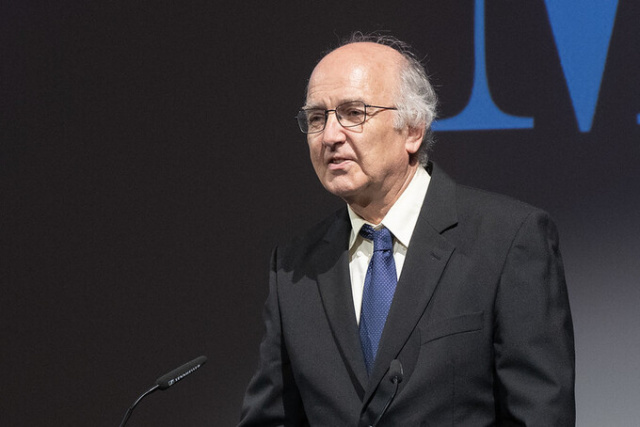
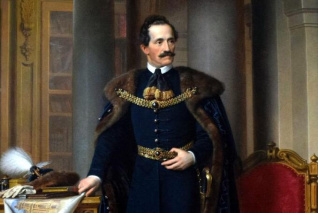


Scientific cooperation as a form of peacebuilding – UNESCO conference at the Hungarian Academy of Sciences headquarters
Peace is not merely the absence of war, but something we build through law, culture and education, resulting in human dignity, mental well-being and dialogue. This was among the points made by Mihály Pósfai, President of the Hungarian Academy of Sciences (MTA), in his welcome address at the UNESCO conference entitled The Path to Peace, held at the MTA headquarters.
TOVÁBB
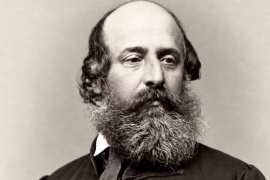
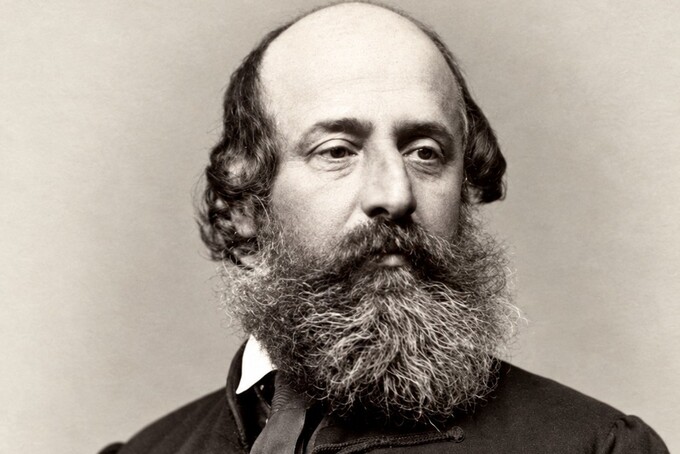
Boundless history: 1849 - Colonel János Korponay, a member of the Hungarian Academy of Sciences, is sentenced to a lengthy prison term after the War of Independence
On 5 May 2025, as the opening event of the 199th Ceremonial General Assembly of the Hungarian Academy of Sciences, the public artwork titled The Boundless History was unveiled. The installation was commissioned by the Hungarian Academy of Sciences and the Municipality of Budapest to mark the 200th anniversary of the Academy’s founding. In this series, we highlight key events featured on the timeline composed of 200 slabs of Tardos limestone.
TOVÁBB
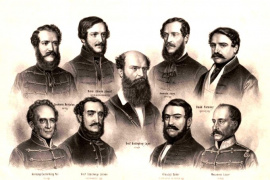
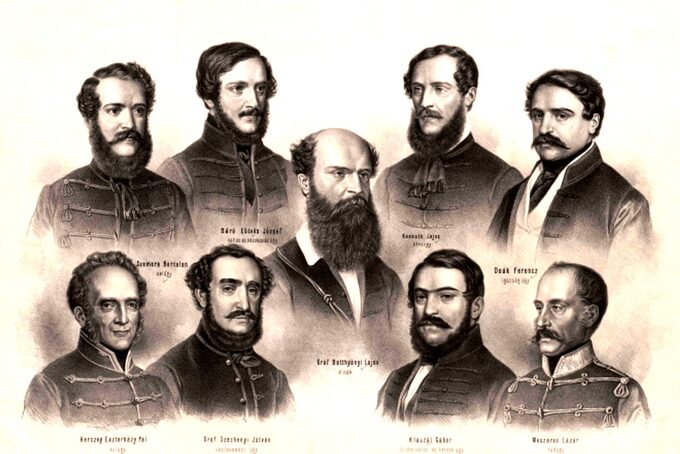
Boundless history: 1848 - Academy members of the first responsible Hungarian government: Ferenc Deák, József Eötvös, Lázár Mészáros, István Széchenyi, Bertalan Szemere
On 5 May 2025, as the opening event of the 199th Ceremonial General Assembly of the Hungarian Academy of Sciences, the public artwork titled The Boundless History was unveiled. The installation was commissioned by the Hungarian Academy of Sciences and the Municipality of Budapest to mark the 200th anniversary of the Academy’s founding. In this series, we highlight key events featured on the timeline composed of 200 slabs of Tardos limestone.
TOVÁBB
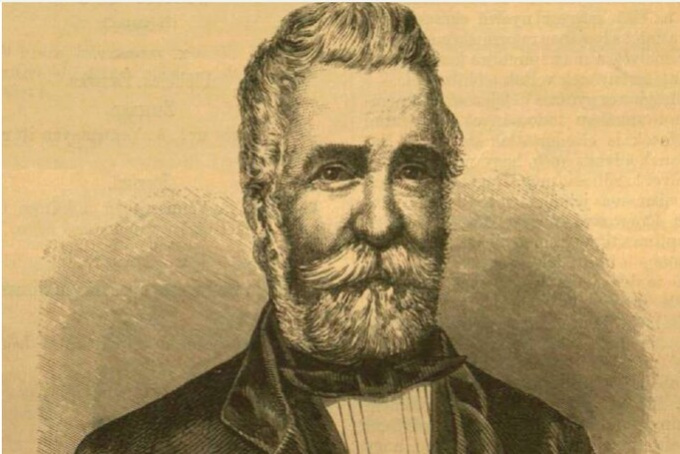
Boundless history: 1841 - The Hungarian Society of Natural Sciences is founded on the initiative of physician and academician Pál Bugát
On 5 May 2025, as the opening event of the 199th Ceremonial General Assembly of the Hungarian Academy of Sciences, the public artwork titled The Boundless History was unveiled. The installation was commissioned by the Hungarian Academy of Sciences and the Municipality of Budapest to mark the 200th anniversary of the Academy’s founding. In this series, we highlight key events featured on the timeline composed of 200 slabs of Tardos limestone.
TOVÁBB
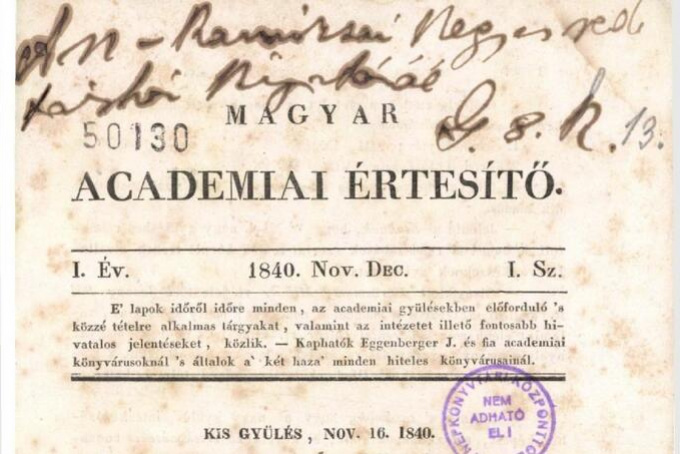
Boundless history: 1840 – The first issue of Magyar Academiai Értesítő, the official gazette of the Hungarian Learned Society, is published
On 5 May 2025, as the opening event of the 199th Ceremonial General Assembly of the Hungarian Academy of Sciences, the public artwork titled The Boundless History was unveiled. The installation was commissioned by the Hungarian Academy of Sciences and the Municipality of Budapest to mark the 200th anniversary of the Academy’s founding. In this series, we highlight key events featured on the timeline composed of 200 slabs of Tardos limestone.
TOVÁBB


Boundless history: 1835: Academy member Sándor Kőrösi Csoma sends fifty copies of his Tibetan–English dictionary to the Academy
On 5 May 2025, as the opening event of the 199th Ceremonial General Assembly of the Hungarian Academy of Sciences, the public artwork titled The Boundless History was unveiled. The installation was commissioned by the Hungarian Academy of Sciences and the Municipality of Budapest to mark the 200th anniversary of the Academy’s founding. In this series, we highlight key events featured on the timeline composed of 200 slabs of Tardos limestone.
TOVÁBB

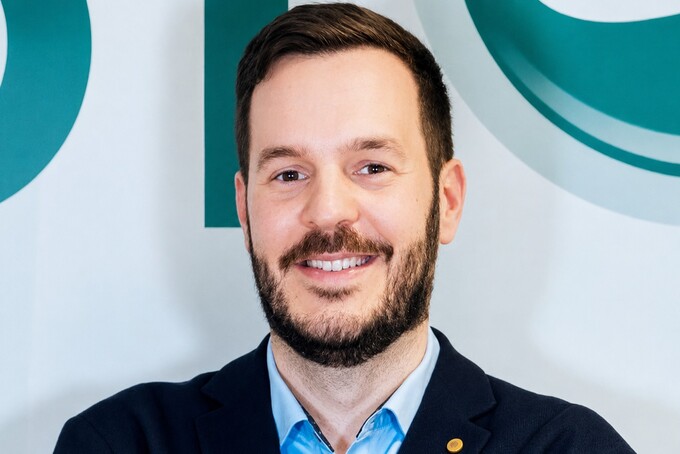
Featured Lendület Researcher: Gábor Feigl
The research of Gábor Feigl, Assistant Professor in the Department of Plant Biology at the University of Szeged, could contribute to improving food security and advancing sustainable agriculture. As the head of the Lendület (Momentum) Research Group on Anthropogenic Stress and Plant Resilience, he is, among other objectives, seeking biomarkers that can predict the effects of environmental stress on plants.
TOVÁBB
A unified Hungarian research network under the Hungarian Academy of Sciences (MTA) could be established as early as October – Joint press release from the Ministry of Science and Technology and MTA
On 14 July, the leadership of the Ministry of Science and Technology and the Hungarian Academy of Sciences met at the Academy’s headquarters to discuss the establishment of a unified Hungarian research institute network and a proposed timetable for its implementation. Based on both the previous and latest round of discussions, the Ministry will draft legislation for the reorganisation and submit it for public comment in early September. The legislation is scheduled to take effect by the end of October, which means that the research network – which was separated from the Academy in 2019 – could be reunited with MTA before the end of this year.
TOVÁBB


EASAC, the Leading Advisory Body of Europe’s Scientific Academies, Marks its 25th Anniversary
On 11 June 2001, the European Academies Science Advisory Council (EASAC), was established by the academies and academic organisations of the European Union to provide policy-makers with jointly formulated, science-based, unified and independent expert advice. The Hungarian Academy of Sciences joined EASAC in 2004, following Hungary's accession to the EU, enabling Hungarian researchers to make their voice heard on the most pressing policy issues together with European scientists.
TOVÁBB
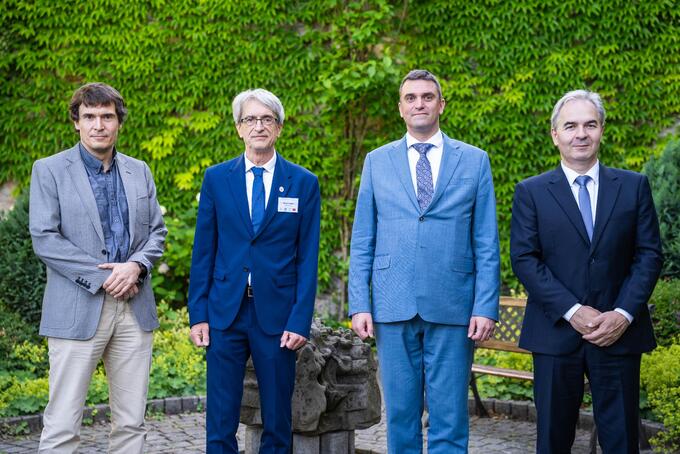
Meeting of the Visegrad Group Academies at Smolenice Castle
The annual forum of the academies of sciences of the Visegrad Group (V4) countries was held in Smolenice, Slovakia on 17-18 June 2026, bringing together representatives from the Czech, Hungarian, Polish and Slovak national academies of sciences.
TOVÁBB
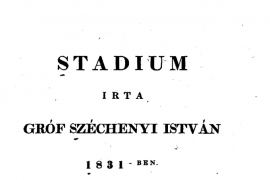
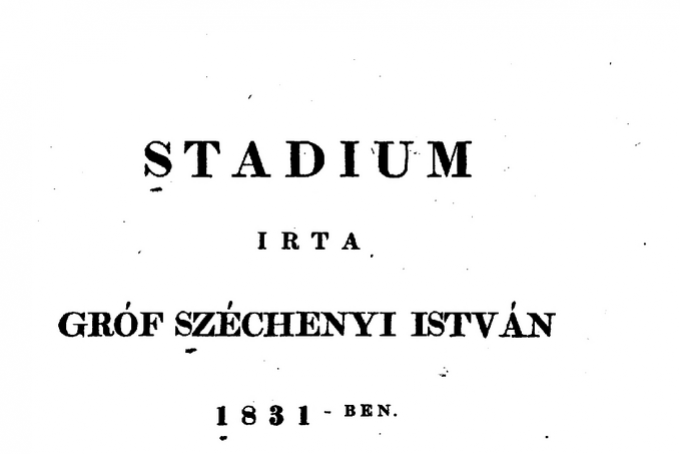
Boundless History:1833 – Count István Széchenyi’s work Stadium, a summary of his reform plans, is published and dedicated to the nation’s legislators
On 5 May 2025, as the opening event of the 199th Ceremonial General Assembly of the Hungarian Academy of Sciences, the public artwork titled The Boundless History was unveiled. The installation was commissioned by the Hungarian Academy of Sciences and the Municipality of Budapest to mark the 200th anniversary of the Academy’s founding. In this series, we highlight key events featured on the timeline composed of 200 slabs of Tardos limestone.
TOVÁBB
_680_454_1779092518_680_454_1782112807_fill_270x180.jpg)
_680_454_1779092518_680_454_1782112807_fill_680x454.jpg)
Featured Lendület Researcher: Karolina Lendák-Kabók
Karolina Lendák-Kabók, a lecturer in the Department of Minority Studies, Faculty of Social Sciences, at Eötvös Loránd University (ELTE), has been researching ethnic groups living in Vojvodina and mixed marriages for many years. She first examined the topic as a Marie Skłodowska-Curie postdoctoral fellow, before placing it in a broader regional context: with the support of the János Bolyai Research Fellowship, she analysed mixed Hungarian–Serbian families in Hungary and mixed Hungarian–Serbian families in Serbia. In her current research project, funded by the Lendület (Momentum) Programme, she is exploring the subject from a historical perspective.
TOVÁBB
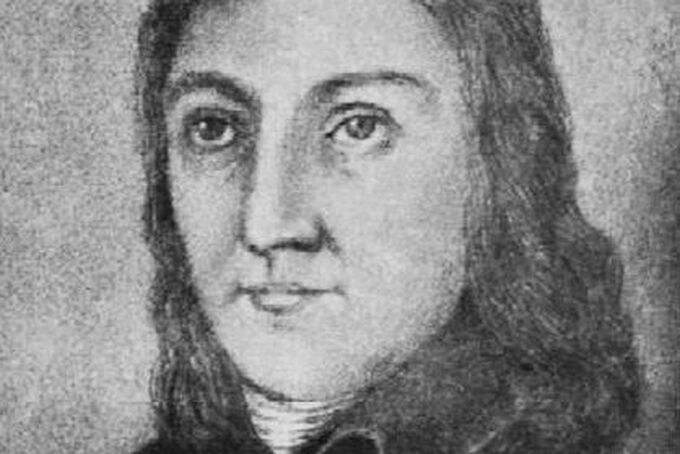
Boundless History: 1832 – Publication of the principal work of mathematician and Academy member Farkas Bolyai, Tentamen, as well as the work of his son, János Bolyai, entitled Appendix
On 5 May 2025, as the opening event of the 199th Ceremonial General Assembly of the Hungarian Academy of Sciences, the public artwork titled The Boundless History was unveiled. The installation was commissioned by the Hungarian Academy of Sciences and the Municipality of Budapest to mark the 200th anniversary of the Academy’s founding. In this series, we highlight key events featured on the timeline composed of 200 slabs of Tardos limestone.
TOVÁBB
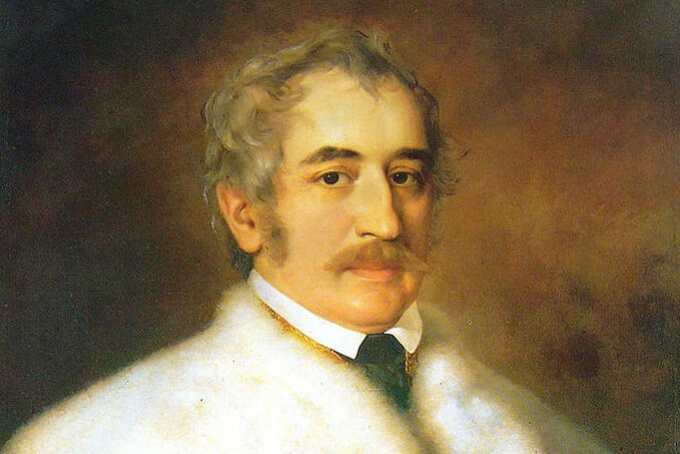
Boundless History: 1826 – Count József Teleki donates his family library “for the use of the Learned Society and all citizens of the nation”
On 5 May 2025, as the opening event of the 199th Ceremonial General Assembly of the Hungarian Academy of Sciences, the public artwork titled The Boundless History was unveiled. The installation was commissioned by the Hungarian Academy of Sciences and the Municipality of Budapest to mark the 200th anniversary of the Academy’s founding. In this series, we highlight key events featured on the timeline composed of 200 slabs of Tardos limestone.
TOVÁBB


Boundless History: 1831 – The Hungarian Learned Society adopts the motto “Sunshine After Rain”. The institution’s first General Assembly
On 5 May 2025, as the opening event of the 199th Ceremonial General Assembly of the Hungarian Academy of Sciences, the public artwork titled The Boundless History was unveiled. The installation was commissioned by the Hungarian Academy of Sciences and the Municipality of Budapest to mark the 200th anniversary of the Academy’s founding. In this series, we highlight key events featured on the timeline composed of 200 slabs of Tardos limestone.
TOVÁBB
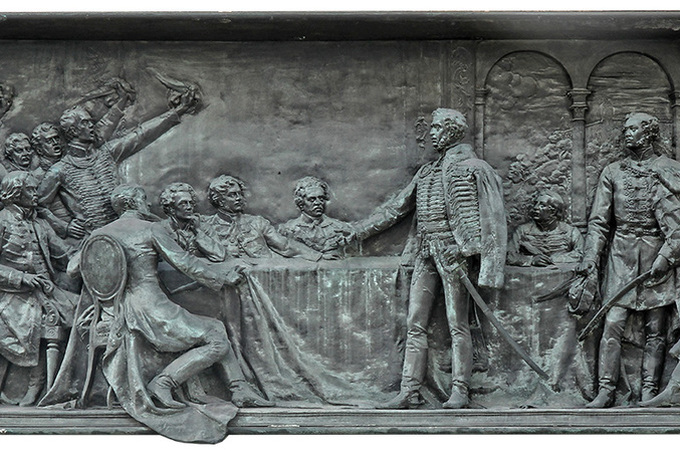
Boundless History: 1825 – Count István Széchenyi’s donation to the National Assembly for the establishment of the Hungarian Learned Society
On 5 May 2025, as the opening event of the 199th Ceremonial General Assembly of the Hungarian Academy of Sciences, the public artwork titled The Boundless History was unveiled. The installation was commissioned by the Hungarian Academy of Sciences and the Municipality of Budapest to mark the 200th anniversary of the Academy’s founding. In this series, we highlight key events featured on the timeline composed of 200 slabs of Tardos limestone.
TOVÁBB
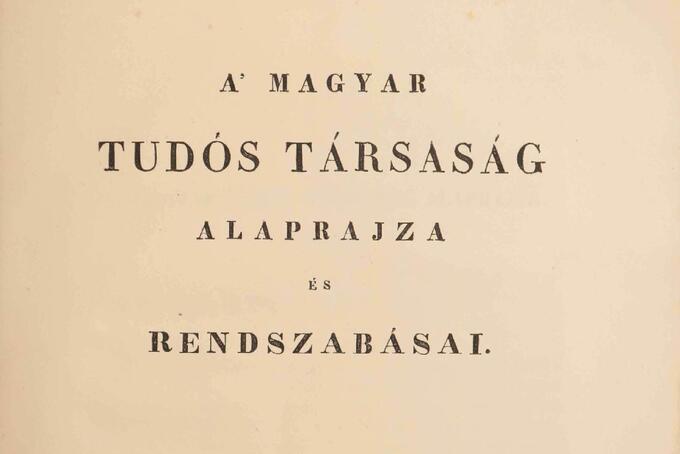
Boundless History: 1827 – Law on the establishment of a learned society or Hungarian academy for the cultivation of the national language
On 5 May 2025, as the opening event of the 199th Ceremonial General Assembly of the Hungarian Academy of Sciences, the public artwork titled The Boundless History was unveiled. The installation was commissioned by the Hungarian Academy of Sciences and the Municipality of Budapest to mark the 200th anniversary of the Academy’s founding. In this series, we highlight key events featured on the timeline composed of 200 slabs of Tardos limestone.
TOVÁBB
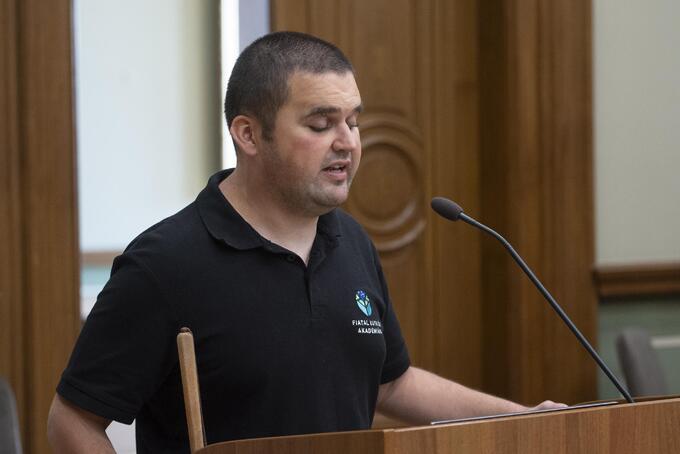
Featured Lendület Researcher: Boldizsár Szentgáli-Tóth
Artificial intelligence (AI) is making its presence felt in every aspect of life, and this trend is only expected to accelerate in the future. The legal profession is no exception, though alongside new opportunities, AI may also entail significant risks. For this reason, the legal profession must prepare now for the challenges posed by AI. This goal underpins the research conducted by Boldizsár Szentgáli-Tóth, senior research fellow at the Institute for Legal Studies of the ELTE Centre for Social Sciences, researcher at the National University of Public Service, and adjunct lecturer at Eötvös Loránd University, together with his colleagues. Their work has received support through the Lendület (Momentum) Programme.
TOVÁBB


Results of the Second Call of the Momentum MSCA Programme
The Momentum MSCA Premium Postdoctoral Fellowship Programme, coordinated by the Hungarian Academy of Sciences, has launched its call for applications for the second time, inviting international postdoctoral researchers to pursue independent research projects in Hungary. By joining established Lendület (Momentum) research groups, fellows develop professionally, acquire new skills and gain international experience, whilst also contributing to scientific excellence and broader research collaboration in Hungary.
TOVÁBB
- 479 results