


Featured Lendület Researcher: Balázs Reizer
Hungarian workers still earn significantly less than their Western counterparts. In order for this situation to change, it is essential to uncover the underlying causes of this phenomenon. This is the task undertaken by Balázs Reizer, Senior Research Fellow at the ELTE Centre for Economic and Regional Studies and Head of the Momentum Technology and Inequality Research Group, together with his colleagues. With his team, he is investigating what Hungarian workers actually do during their working hours and how the innovative transformation and robotisation of production affect workers in different job roles.
People often wonder why, for example, an employee in Germany earns significantly more than a Hungarian employee in the same position. Some hold the view that this is partly due to the fact that German employees work more efficiently and, when at work, get more done while spending less time on activities unrelated to their job. However, no one knows for sure if this is actually the case, as no targeted research has been conducted on this topic yet.
_fit_640x10000.jpg) Balázs Reizer Photo: kti.krtk.hu
Balázs Reizer Photo: kti.krtk.huReizer and his colleagues at the ELTE Centre for Economic and Regional Studies therefore began several years ago to seek funding for a survey that could measure what Hungarian employees actually do in their workplaces. These efforts eventually developed into the researcher’s Lendület grant-winning research project.
The Impact of Robotisation and Technological Innovation
“As we delved deeper into the study of employment, technology, and job tasks, we realised that the measurement methods used previously were inadequate and could not answer many questions,” said Reizer. “For example, many people agree that technology and automation reduce industrial employment, but this does not explain why wage inequalities within professions are growing.
We know very little about how robotisation and technological innovation affect individual employees at a company.
It certainly affects blue-collar workers on the production line differently than it does office workers. This is also very important from a public policy perspective, as it enables the government to support innovative companies in their search for labour.”
To answer these questions, researchers require three types of information, which they will obtain through cooperation with the Hungarian Central Statistical Office. The first concerns what people actually do at their workplaces, which must be established through questionnaires. Another piece of information, which can be obtained from government records, relates to the career paths employees have followed in the labour market – that is, how much they earned at various companies. This can then be compared with their activities at work, allowing conclusions to be drawn about how the work of people in different positions evolves at their workplaces and how their use of time at work changes. The third type of information relates to the innovative activities they engage in and the technological solutions they use. This is regularly surveyed by national statistical offices on behalf of Eurostat.
What about the employees?
“These data points have existed separately in several countries before. However, if we could connect these three different types of information, we could gain insights into how, for example, a company’s implementation of an enterprise resource planning system affects the tasks, wages, and employment of white-collar workers,” continued the research group leader. “This is particularly timely because more and more companies are going to innovate at the organisational level. We assume that the companies that implement this will become more productive and thus contribute more to economic growth. But it would be good to know what will happen to their employees in the process.”
Although it is often argued in favour of robotisation that this form of innovation does not render human jobs redundant, on the contrary, creates positions requiring higher levels of skill,
in reality very little is known about the actual future impact of these developments on the labour market.
Researchers and consulting firms specialising in forecasting attempt to draw conclusions about the effects of technological progress based on various assumptions, but we really do not know what form the labour market will take in ten or fifteen years. “The labour market in Hungary is currently very tight, so it’s very difficult to hire new workers. It’s much easier to try to retrain someone within the company and reassign them to tasks for which they cannot hire new people,” argued Reizer. “There is a labour shortage in every job category, but especially in white-collar positions. There are very few college graduates in Hungary. The belief that there are few skilled workers is merely the result of misinterpreted statistics. Within the European Union, the proportion of university graduates in Hungary is among the lowest, yet the wage premium for college graduates is the highest. This amounts to more than 70%, whereas in Austria, for example, the comparable figure is only around 20–30%. In other words, there is a distinct shortage of college-educated workers in Hungary, and if we want the economy to grow and people to become more prosperous overall, resources need to be invested in developing people’s skills.”
Possible Scenarios
Most Anglo-Saxon researchers believe that robotisation will reduce employment. In contrast, researchers in continental Europe – particularly in Germany and France – argue that if a company introduces robots, it becomes much more productive, able to produce more for less money or at lower cost. As a result, the company will grow and create new jobs. Thus, the additional labour demand resulting from increased efficiency will compensate for the jobs that are lost. According to Reizer, however, it is impossible to know at this moment what will actually happen, as these assumptions are merely speculation. There will certainly be examples of both scenarios.
Since the use of employees’ time at work is measured via questionnaire (self-reporting) – that is, how much they actually work and what portion of their working hours they spend doing something else, that is, showing low “work engagement” – the question arises as to how reliable these measurements are. After all, it may be assumed that people are not particularly eager to admit that out of the eight hours they spend at work, they spend five chatting with colleagues in the hallway. According to Reizer, however – somewhat surprisingly – these surveys nevertheless provide a more or less realistic picture of workplace activity. The questionnaires have confirmed, for example, that those paid by the hour generally spend more time “not working”, and the same tends to occur when a company receives fewer orders.
“We usually ask about aspects of work performance that employees have no real incentive to misrepresent.
For example, a very important question is what proportion of their working time consists of monotonous, repetitive physical labour and what proportion involves intellectual tasks. This can explain, for example, the very large wage disparities within the same occupations,” said Reizer. “Perhaps what I am most hoping this project will reveal is why, for example, some lathe operators earn a great deal while the average wage in the profession is low. We assume that this is because they are much more qualified, more skilled, and perform more complex tasks than most. If we want to move beyond the current situation where a significant portion of Hungarian industry functions merely as an assembly plant, then the number of complex, high-value-added jobs needs to be increased.”
A témához kapcsolódó cikkeink
_680_454_1773830811_fill_240x160.jpg)
Featured Lendület Researcher: Balázs Reizer
Hungarian workers still earn significantly less than their Western counterparts. In order for this situation to change, it is essential to uncover the underlying causes of this phenomenon. This is the task undertaken by Balázs Reizer, Senior Research Fellow at the ELTE Centre for Economic and Regional Studies and Head of the Momentum Technology and Inequality Research Group, together with his colleagues. With his team, he is investigating what Hungarian workers actually do during their working hours and how the innovative transformation and robotisation of production affect workers in different job roles.

Featured Lendület Researcher: Péter Pál Pach
Péter Pál Pach, Senior Research Fellow at the Alfréd Rényi Institute of Mathematics and Head of the MTA–HUN–REN RI Momentum (Lendület) Arithmetic Combinatorics Research Group, continues his research work. Together with his co-authors, he was awarded the Frontiers of Science Award in 2024 for their 2016 paper, in which they developed a new version of the polynomial method. The research group’s work focuses on fundamental research in the field of arithmetic combinatorics. However, this field has numerous connections to other branches of mathematics, so the research group’s results will also be of use to mathematicians researching many other problems.
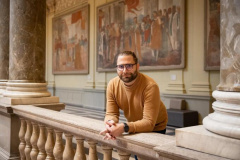
Featured Lendület Researcher: Ádám Lovas-Kiss
Waterbirds play a much more important role in the dispersal of aquatic plants, and even of invertebrate animals, than was previously assumed, as they consume reproductive seeds and other propagules and then excrete them in another small pond. Ádám Lovas-Kiss, research fellow at the Institute of Aquatic Ecology of the HUN–REN Centre for Ecological Research and head of the Momentum Dispersal Ecology Research Group, is studying this process with the support of the Momentum Programme. The importance of his research is further increased by the fact that climate change is causing more and more wetlands to disappear and the condition of aquatic communities to deteriorate.
_680_454_1764597338_fill_240x160.jpg)
Featured Lendület Researcher: Edit Mátyus
Although quantum electrodynamics is considered a well-established theory in physics, in chemistry – in the world of atoms and molecules – it still raises a number of unresolved questions. Edit Mátyus, Doctor of the Hungarian Academy of Sciences, Professor in the Department of Physical Chemistry at Eötvös Loránd University, and head of the Molecular Quantum Electrodynamics Research Group, and her colleagues are attempting to answer these questions with the support of the Momentum Programme.

Featured Lendület Researcher: Péter Nemes-Incze
Often, the simplest models are needed to understand the most complex laws of nature. This is especially true for interacting electron systems, about which we still know relatively little today because, until now, we have not had access to sufficiently simple model crystals. Despite this, Péter Nemes-Incze, head of the Momentum Topology in Nanostructures Research Group at the Institute of Technical Physics and Materials Science of the HUN–REN Centre for Energy Research, and his colleagues believe that this model could be rhombohedral graphite, which they are investigating with the support of their Momentum grant.
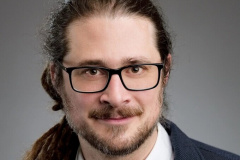
Featured Lendület Researcher: Balázs Lengyel
Nowadays, telecommunications providers and IT companies collect vast amounts of electronic data about us. These databases may contain sensitive personal data, which means they also carry risks, but at the same time they can be an incredibly valuable source of information for the social sciences. Balázs Lengyel, Senior Research Fellow at the Institute of Economics of the HUN-REN Centre for Economic and Regional Studies, and his colleagues are analysing some of this data with the support of the Momentum (Lendület) Programme. The researcher has won a Momentum grant for the second time – now in the advanced category – and is currently researching innovation and inequality in dynamic urban networks.
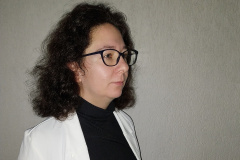
Featured Lendület Researcher: Tekla Etelka Gráczi
Various neurological diseases and conditions often affect a person’s speech. Tekla Etelka Gráczi, Senior Research Fellow at the HUN-REN Research Centre for Linguistics’ Institute for General and Hungarian Linguistics, and her Momentum research group are investigating this effect in subjects with Parkinson’s disease, Down syndrome and multiple sclerosis. Their research examines the acoustic characteristics of spoken sounds and the mechanism of sound production.

Featured Lendület Researcher: Réka Lukács
Réka Lukács, Senior Research Fellow at the Institute for Geological and Geochemical Research of the HUN-REN Research Centre for Astronomy and Earth Sciences is researching fundamental questions in volcanology with her team, with the support of the Momentum Programme. In addition to its scientific value, their research also has important practical and even disaster management implications, as hundreds of millions of people around the world live near dangerous volcanoes. It is therefore vital that we understand the workings of volcanoes as well as possible, so that our predictive models can become increasingly accurate.
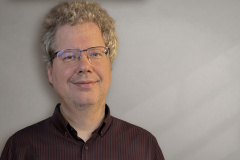
Featured Lendület Researcher: Gergely Harcos
Automorphic forms play an important role in many areas of mathematics, including number theory, geometry, analysis and mathematical physics. Gergely Harcos, Research Professor at the HUN-REN Alfréd Rényi Institute of Mathematics and Head of the Momentum Automorph Research Group, is researching these automorphic forms with the support of the Momentum Programme. According to the researcher, the study of these mathematical objects could even bring us closer to one of the “holy grails” of mathematics, the proof of the Riemann hypothesis.

Featured Lendület Researcher: Péter Kele
Péter Kele, Head of the Organic Chemistry Research Group of the HUN-REN Institute of Organic Chemistry at the HUN-REN Natural Science Research Centre, and his colleagues are developing bioorthogonal functional groups that can “switch on and off” the molecule attached to them in response to light. This can be very useful in the case of active pharmaceutical ingredients, for example, as it may be possible to activate the chemotherapeutic agent only once it has attached to a tumour cell.
_680_454_1749540940_fill_240x160.jpg)
Featured Lendület Researcher: Lajos Vince Kemény
Although curing melanoma is considered a success story in cancer therapy, with immunotherapy playing a central role, there are still patients who do not respond well to treatment. Thus, it is of paramount importance to find immunotherapies to which tumour cells do not become resistant or to which they have more difficulty in becoming resistant. Vince Lajos Kemény, Senior Research Fellow at the Institute of Life Sciences and the Department of Dermatology, Nematology and Dermatological Oncology at Semmelweis University, and his colleagues are searching for therapeutic targets with the support of the Lendület (Momentum) Programme and consider it important to bring their results into everyday clinical practice as soon as possible.
Featured Lendület Researcher: Balázs Hangya
How do the neurons in the lateral septum of the brain, which are important for thinking-related brain function and communicate with each other via acetylcholine, behave? This is the question that Balázs Hangya and his research team, supported by MTA’s Lendület (Momentum) Programme, are trying to answer. In addition to the function of nerve cells, the researchers are also investigating their role in the development of Alzheimer’s disease.

Featured Lendület Researcher: Zsuzsa Bagoly
Literally every minute counts in the effective treatment of a stroke, as the oxygen-deprived areas of the brain start to die immediately. The crisis is most often caused by a blood clot, which is either dissolved by medication or mechanically pulled out of the vessel. However, clot dissolution can have serious side effects, and doctors currently have no quick test to decide on the most appropriate treatment. Zsuzsa Bagoly, Associate Professor in the Division of Clinical Laboratory Science at the University of Debrecen’s Institute of Laboratory Medicine, is working to develop such a test with the support of the Momentum Programme, and the results will be useful in patient care almost immediately.
_680_454_1733819474_fill_240x160.jpg)
Featured Lendület Researcher: Gábor Czakó
Theoretical chemistry has now moved out of the shadow of experimental chemistry and has become an exploratory science in its own right. Gábor Czakó, Associate Professor and Doctor of the Hungarian Academy of Sciences and head of the Research Group on Theoretical Reaction Dynamics of the Department of Physical Chemistry and Materials Science at the University of Szeged, argues that it is often the case nowadays that if the experimental and calculated results do not match, then there is something wrong with the experiments. The Momentum research group he leads is trying to unravel the molecular and atomic mechanisms of the most fundamental organic chemical reactions using mathematical methods.

Featured Lendület Researcher: Márton Bene
The rise of social media, amongst other phenomena, has created a completely new situation in political communication. This may also affect the functioning of political representation, which many political scientists believe has been in crisis in many democracies in recent decades. Márton Bene, Senior Research Fellow at the Institute for Political Science of the Centre for Social Sciences and head of the Momentum research group on Political Representation in the Age of Social Media, and his colleagues are therefore investigating the impact of social media. These effects may not only be at the level of the electorate, but may also influence the messages politicians send.
Featured Lendület Researcher: Csaba Bödör
Tumours, including tumours of the haematopoietic organs, continue to kill many people, so research into them, whether exploratory research or knowledge that can be used in treatment, is a priority. Csaba Bödör, Professor and Deputy Director of the Institute of Pathology and Experimental Cancer Research at Semmelweis University, and Head of the Molecular Oncohematology Momentum Research Group, has been investigating haematological tumours for more than a decade. The work of the research group is being continued with the help of the Momentum grant, and their results are likely to have immediate applications in patient care.