


EASAC, the Leading Advisory Body of Europe’s Scientific Academies, Marks its 25th Anniversary
On 11 June 2001, the European Academies Science Advisory Council (EASAC), was established by the academies and academic organisations of the European Union to provide policy-makers with jointly formulated, science-based, unified and independent expert advice. The Hungarian Academy of Sciences joined EASAC in 2004, following Hungary's accession to the EU, enabling Hungarian researchers to make their voice heard on the most pressing policy issues together with European scientists.
“European science operates at the forefront of global research and innovation. Scientists across the European Union are engaged in research and development on fundamental, practical, and societal problems. Science and innovation are quintessential for the European Union’s freedom and resilience, for its global competitiveness, its prosperity and well-being. This should not be taken for granted. It is essential to safeguard the open and international collaborative character of the scientific endeavor, invest in the full breadth of science and scholarship, and guarantee the uptake of scientific insights into policies that address the major challenges of our democratic societies.”
The above quote can be read in a joint statement published on easac.hu in May 2024 by the presidents of the European academies of sciences, reminding the candidates in the European Parliament elections that science has a key role to play in the future of the European Union. The document, drafted and signed by the academies and scientific bodies of 27 EU Member States (including Tamás Freund, former President representing the Hungarian Academy of Sciences then), underlines that the future of Europe depends on open and free science and education. Amid the rapidly changing political, social, technological, and environmental conditions of the 21st century, EASAC, the Scientific Advisory Board of European Academies, which celebrated its 25th anniversary on June 11, provides a framework for advocating the importance of a unified European scientific community capable of coordinated action.
Now celebrating its 25th anniversary, EASAC was founded in 2001 by the National Academies of Sciences of the European Union at the initiative of the Royal Swedish Academy of Sciences, with the idea of providing European policy-makers with jointly formulated, science-based independent expert advice.
At the time of EASAC’s establishment in 2001, its founding members were the national academies of EU Member States. Two major pan-European scientific networks also joined as founding organizations, the Academia Europaea (the London-based pan-European academy for the humanities, social sciences, law and natural sciences) and the All European Academies (ALLEA). In 2025, the Federation of European Academies of Medicine (FEAM), which had previously participated as an observer, also joined EASAC as a cooperating umbrella organization.
„We have a great challenge in front of us, building science into policy in Europe. Many key policy issues have a scientific component. The need for quick and reliable advice from credible sources is more important than ever.”
– These were the words of Uno Lindberg, Professor at the Royal Swedish Academy of Sciences and first President of EASAC, when he announced the establishment of EASAC in a press release issued on 11 June 2001. Lindberg's words are as timely today as they were then: underline the continued importance of science-based advice in a rapidly changing political environment shaped by technological developments, geopolitical changes and multiple socio-environmental crises.
Since its establishment in June 2001, EASAC has served as a platform for Europe's national science academies to work together to strengthen the science-policy nexus. EASAC's main ambition is to ensure that the decisions of the EU institutions are based on independent, rigorous scientific evidence and to represent scientifically based, credible opinions and positions developed by the research community at all levels of decision-making on all issues where understanding the scientific background is essential for decision-makers.
With the establishment of EASAC, European science academies gained the opportunity to speak with a unified voice on science policy issues. The EASAC Council, the organisation's main management body, currently consists of 31 distinguished scientists, nominated by 28 European national academies, as well as Academia Europaea, and ALLEA and FEAM as collaborating umbrella organisations for European scientists. The Hungarian Academy of Sciences is also a member of the organization, which therefore represents Hungarian interests in this important European scientific organization as well.
More important than ever
“As we celebrate 25 years of EASAC, the pressures on science - from misinformation, shrinking resources, and political polarization to the complexity of global challenges - require the science community to stand together more than ever. The days when it was considered simple common sense to listen to experts are over. In the future, we will have to work even harder to earn trust and amplify the collective voice of European Academies and to ensure that evidence remains at the heart of policy. EASAC’s mission has always been to unite Europe’s brightest minds to serve the public good, and that mission is now more vital than ever." These were the words by EASAC President Lise Øvreås in a statement published on 11th June 2026.
EASAC’s 25th anniversary highlights the growing importance of sound, independent scientific policy advice, as noted in the anniversary statement. In an era of disinformation and social divisions, the organisation has demonstrated for a quarter of a century how cross-border and interdisciplinary cooperation can strengthen the influence of scientific findings on policy-making processes. Over the past 25 years, EASAC has published more than 100 reports and statements supporting the European Commission, Parliament and the Council with proposals on pressing issues such as biodiversity loss, pandemic preparedness, energy supply and artificial intelligence. Its unique model, which brings together the national academies of EU Member States, Norway, Switzerland and the United Kingdom, provides a diverse, multidisciplinary perspective, reflecting the best of European science. The full communication is available in English here.
25 years of service to Europe
Looking back over the past quarter century, EASAC has remained firmly committed to promoting science-policy dialogue and supporting evidence-based decision-making. During its early years (2001-2003), it focused mainly on topics that directly affected EU-level legislation and sustainable development:
- Review of genetically modified (GMO) crops: one of EASAC's first major professional opinions was on agricultural biotechnology, the regulation of GMO products in Europe and their environmental and health impacts.
- European energy policy analyses: several EASAC reports have been prepared on the integration of electricity grids and the possibilities to support renewables at an early stage.
- Sustainable forest management: Member academies have jointly explored ways to reduce CO2 emissions through the conservation and sustainable management of European forests.
EASAC's priorities over the past two decades have shifted from local, isolated professional issues to systemic, existential global crises and European strategic autonomy. While the fundamental structure of the most important topics addressed by the organization (environment, energy, life sciences) have remained unchanged, the depth, urgency and political significance of the challenges within these fields have evolved profoundly. The descriptive scientific analyses that characterized its early work have increasingly given way to calls for immediate action, reflecting a far greater sense of urgency. The academies now openly state that policy measures are insufficient and that scientific facts must be put before political and economic interests.
Environment: From protecting species to preventing systemic collapse
- In the early 2000s, the focus was still on individual environmental impacts, sustainable forest management methods and local biodiversity protection.
- Today, EASAC calls for a transformation of the entire economic model. Its most recent statements advocate moving beyond GDP-centered models of growth and argue that nature restoration (such as the rehabilitation of wetlands and peatlands) should be treated not as a luxury, but as the first line of defence against climate disasters.
Energy: From Technological Optimism to Geopolitical Constraint
- The main priorities in the early 2000s were the integration of new technologies (such as early renewables) and the physical interconnectivity of electricity grids.
- In contrast, according to EASAC resolutions issued in recent years, energy has become a matter of safety and survival. Its latest analyses call for the rapid reduction of dependence on fossil energy (Russian and US imports) as geopolitical conflicts directly threaten Europe’s security of supply and industrial competitiveness.
Life sciences and health: From GMO disputes to global health security
- In the years following the establishment of EASAC, discussions and reports continued to focus on agricultural biotechnology, the regulation of genetically modified organisms (GMO) and food safety.
- Nowadays, the focus of the debate has shifted to the direct health effects of climate change. EASAC is now warning decision-makers about the risks of more frequent pandemics, heatwave deaths and the spread of tropical diseases in Europe.
How is an EASAC statement issued?
Positions and studies on various topics – 3-4 per year – are mainly prepared by EASAC on its own initiative, while a smaller number are produced at the request of political institutions. (For example, work was carried out at the request of the European Parliament’s Directorate for Science and STOA – Panel for the Future of Science and Technology).
EASAC's decision-making body is the Council, which also decides on the organisation's internal rules, strategy and funding. The Council meets twice a year, always in a country preparing for the rotating EU presidency. (The Hungarian Academy of Sciences has hosted two Council meetings in Budapest so far: from 17 to 18 June 2010 and from 5 to 7 June 2024.)
The topic is chosen at EASAC Council meetings, followed by the selection of experts in the topic, the synthesis of existing knowledge and the identification of controversial issues through several rounds of expert meetings. Particular emphasis is placed on ensuring that the final reports and recommendations - following peer review - are concise and accessible, so that they can be readily understood not only by scientists but also by policymakers and other non-specialist audiences.
To channel its scientific expertise effectively, EASAC operates through thematic Steering Panels. There are currently three panels within EASAC: Energy Steering Panel, Environment Steering Panel, Biosciences and Public Health Steering Panel. These three areas constitute EASAC’s current scientific priorities. The Council decides on the inclusion of new areas of expertise, the final work programme, the specific work to be carried out in each area of expertise and formally approves the materials produced. The formal approval (endorsement) of the reports, i.e. the preparation and revision process, is carried out by the member academies.
What types of requests does the Hungarian Academy of Sciences receive from EASAC?
- Nomination of experts for thematic working groups and other EASAC bodies, nomination of experts for specific studies.
- Evaluation of semi-finished studies, sub-materials, peer review of reports.
- Formal approval of completed studies.
- Dissemination of EASAC studies to the relevant scientific departments of the Hungarian Academy of Sciences, as well as to the relevant ministries and, on an ad hoc basis, to other government bodies, publishing information to the general public on the website and social media platforms of the Hungarian Academy of Sciences.
Hungarian participation in the work of the organisation
During the initial years of Hungary’s membership, the Hungarian Academy of Sciences was represented on the EASAC Council by its President, Szilveszter E. Vizi. During the EASAC studies, between 2005 and 2008, academician Béla Nagy was involved in the preparation of four studies (including the report on Antibiotics resistance and Zoonosis), in addition to which he presented one of the studies to the decision-makers of the European Parliament. In September 2008, the new President of the Hungarian Academy of Sciences, József Pálinkás, in a letter to EASAC President Volker ter Meulen, reaffirmed the institution’s commitment to EASAC membership. Between 2010 and 2016, József Pálinkás also served as Vice-President of EASAC.
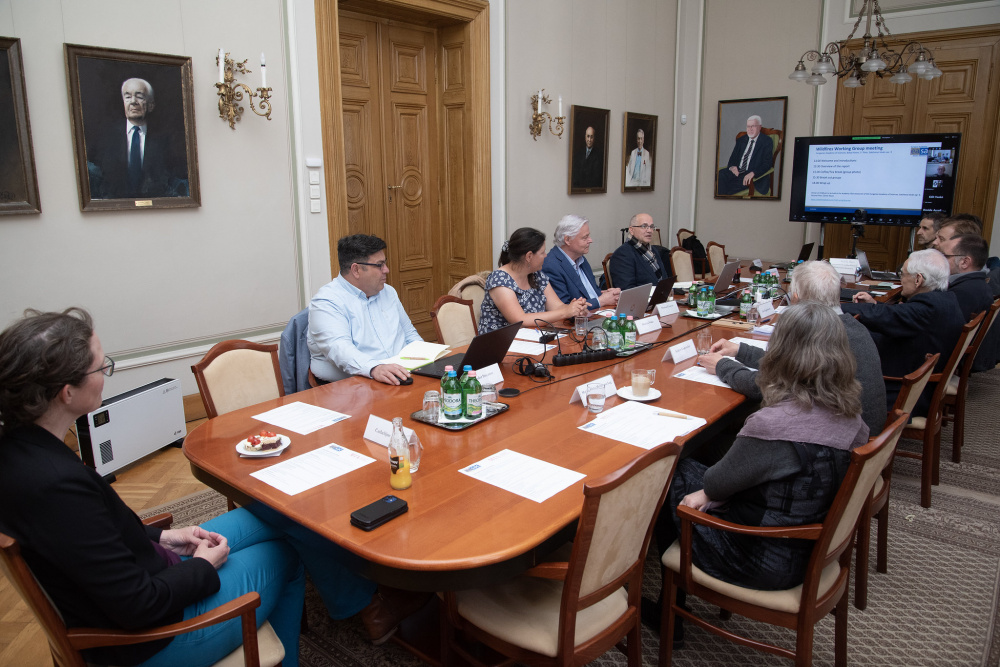 2024 EASAC Changing Wildfires Working Group meeting at the headquarters of the Hungarian Academy of Sciences in Budapest Photo: Tamás Szigeti / Hungarian Academy of Sciences
The following two specific cases are good examples of how EASAC and the Hungarian Academy of Sciences have worked and continue to work together:
- The Presidential Committee for Health (EBE) of the Hungarian Academy of Sciences, established in 2017, set the goal of using the international scientific literature and the position papers of international organizations to enable the Academy to fulfil its role as the nation’s scientific advisor. EASAC's activities have significantly strengthened this commitment. During the Covid-19 pandemic, the Medical Sciences Department of the Hungarian Academy of Sciences carried out continuous online advisory tasks according to EASAC’s mission statement.
- The EASAC resolutions on homeopathy and traditional Chinese medicine practically confirmed the criticisms expressed by the Medical Sciences Department of the Hungarian Academy of Sciences years ago, so when the EASAC reports dealing with these topics came out, they confirmed the member academies, including the Hungarian Academy of Sciences, that these topics are very important under the programmes of the other European academies and worthy of being addressed.
At present, György Kosztolányi, Vice-President of life sciences of the Hungarian Academy of Sciences, whose term of office expired in May 2026, represents the Academy in the Council of the organisation. András Báldi, correspondent member of the Hungarian Academy of Sciences and research professor at the HUN-REN Centre for Ecological Research, has been participating in the work of the environmental panel since 2015 and is currently co-chairing it (the administrative background of the environmental panel is provided by the International Relations Department of the Secretariat of the Hungarian Academy of Sciences). It is worth highlighting the work of Orsolya Valkó, Doctor of the Hungarian Academy of Sciences, head of a research group at the Institute of Ecology and Botany of the HUN-REN Centre for Ecological Research, who has co-chaired two working groups responsible for EASAC reports (on soil-renewal agriculture and forest fires). Bálint Hartmann, senior research fellow at HUN-REN Centre for Energy Research represents the Hungarian research community in EASAC as a member of the EASAC Energy Efficiency Management Board. Beáta Sperlágh, full member of the Hungarian Academy of Sciences and director of HUN-REN Institute of Experimental Medicine (KOKI) has been member of the Life Sciences Steering Panel since 2016.
The list of Hungarians who participated in EASAC between 2005 and 2026 can be found here.
To mark the 25th anniversary of EASAC, we spoke with several former and current Hungarian representatives of the organization. Their brief interviews are presented below.
György Kosztolányi
How would you describe EASAC? What is the most important goal of the organization and how is it achieved?
EASAC is an independent body of European academies providing scientific advice, established in 2001 at the initiative of Sweden and England. All participating academies provide scientific advice at national level. EASAC is responsible for producing and representing scientifically sound, reliable opinions and positions for European law- and decision-makers on all issues where understanding the relevant scientific background is important. There are 3-4 major studies per year in 3 major disciplines: energy, environment and life sciences. These three areas are the current professional focus. Great emphasis is placed on the relative brevity of studies and recommendations and their comprehensibility for non-scientific users. The selection of the topic is approved by EASAC’s decision-making body, the Council. Experts are then recruited from the nominees of the member academies, and on the basis of a synthesis of existing knowledge, the working group prepares the report, which is made public and presented after peer review. The Council also formally approves the finished materials.
EASAC is also a member of the consortium of European academic networks, SAPEA (Science Advice for Policy by European Academies), part of the Scientific Advice Mechanism (SAM), which provides independent scientific advice to Commissioners of the European Commission. At the request of the seven-member body of Chief Scientific Advisors, it prepares evidence-based reports on topics such as the feasibility and risks of implementing research and technologies related to modify the impact of solar radiation, as well as recommendations for the development of a regulatory environment; cross-sectoral evidence-based governance to implement the EU One Health concept or develop actions and tasks towards sustainable food consumption.
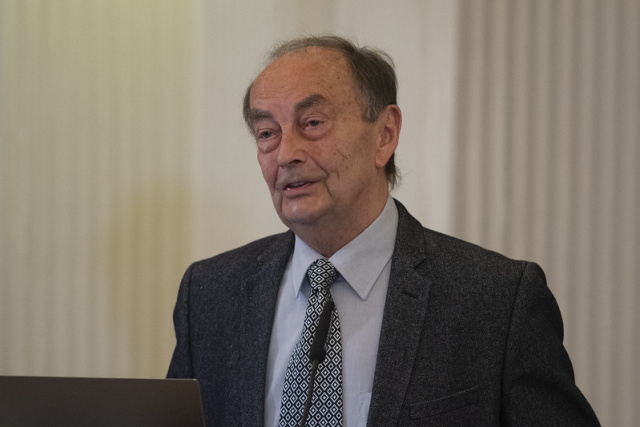 György Kosztolányi at the 2023 presentation of the EASAC report on neonicotinoids in Budapest Photo: Tamás Szigeti / Hungarian Academy of Sciences
What is the commitment that no organisation other than EASAC represents in the field of scientific advice in Europe?
The unique value of EASAC lies in the fact that it represents a common, independent and consensual position of the European national academies of science. Its high legitimacy is based on the scientific excellence and outstanding social prestige of its member academies. This high prestige is well illustrated by the national-level representative survey commissioned by the Hungarian Academy of Sciences, published in January 2026, according to which Hungarian society trusts the Academy and scientists the most among the institutions and occupational groups examined. It is important to underline that EASAC’s recommendations are not merely expert opinions, but joint positions of the most prestigious institutions of the European scientific community. EASAC’s specific role is to develop long-term, science-based policy recommendations in the public interest on issues that affect multiple countries and disciplines, while establishing a direct link between national academies and European decision-making.
Why should academies participate in EASAC?
On the one hand, this is an excellent way to apply the knowledge of local experts and researchers internationally. By participating in thematic working groups, by leading them professionally, or by reviewing and commenting on a study, researchers enter the international scientific community. On the other hand, EASAC’s evidence-based studies, involving national academies, convey credible views to decision-makers at EU and Member State level. Through the articles published on the website of the Hungarian Academy of Sciences, EASAC's studies receive wide publicity and are regularly cited by leading Hungarian press publications dealing with scientific dissemination. The published studies are forwarded to the relevant scientific departments of the Academy and relevant units of its Secretariat, as well as to the relevant ministries and, if necessary, other governmental bodies and non-governmental organizations. In connection with the presentation of major studies, we organize professional discussion forums at the Academy.
József Pálinkás
How would you describe EASAC? What is the most important task of the organization and how does it achieve its goals?
EASAC is the organisation of the European academies of science, established in 2001 to provide effective, science-based, credible, rapid and reliable expert advice to decision-makers and society as a whole on issues relevant and critical to (European) society. EASAC's main objective is to integrate science into policy-making and thus into politics, because almost all key policy issues have a scientific dimension. The importance of effective science-based advice was rightly recognised in 2001. Time has confirmed the founders of EASAC, and today, in a rapidly changing political environment shaped by newer and newer technological challenges, geopolitical changes and multiple socio-environmental crises, this is still necessary.
EASAC focuses its work on three major areas: environment, energy as well as biological sciences and public health. The three areas are led by three professional programme directors, recognised in these areas and partly employed by EASAC, who organise the preparation of the studies. Programme directors are assisted by two co-chairs per programme to bring together the work of the Steering Panel, selected by EASAC's main strategic decision-making body, the Council, from experts delegated by member academies. The studies carried out by the Steering Panels are discussed by the EASAC Board and submitted to the Council for adoption. The resulting documents are scientific advice of the highest professional standard for European decision-makers, which, of course, can also be freely used by national academies in their own national advisory work. The EASAC Board, consisting of the elected EASAC Chairperson and Deputy Chairpersons (who also oversee one programme), is assisted by a small and efficient Secretariat, which also organizes the Steering Panels and the programmes.
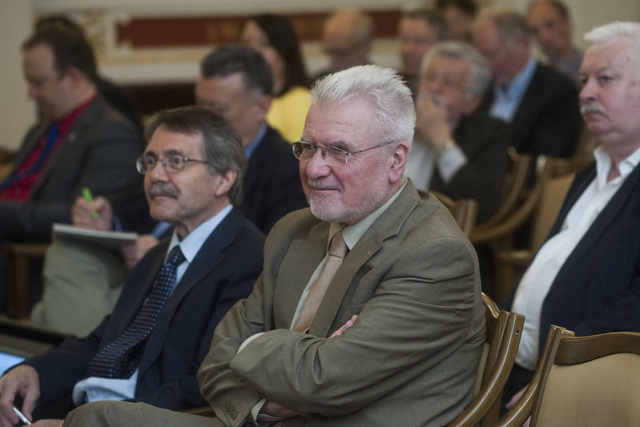 József Pálinkás at the joint meeting of EASAC's energy and environmental panels in Budapest in 2018 Photo: Tamás Szigeti / Hungarian Academy of Sciences
Why should academies participate in EASAC?
National academies have a vital interest in participating in the work of this very efficient organisation, which provides scientific advice professionally at European level. On the one hand, they have direct access to the resulting scientific policy advice, which can be used very well to carry out their own national advisory tasks, and on the other hand, they can actively participate in the implementation of a very good practice form of advice. The innovation created by EASAC in this area is that it focuses on specific areas, i.e. it does not provide advice in general, and, on the other hand, it can respond to needs collectively and quickly by employing professional programme directors, which can also be a best practice for national academies.
What did it mean to you personally to participate in EASAC?
When I was elected President of the Hungarian Academy of Sciences in 2008, I reviewed the international academic organisations in which the Hungarian Academy of Sciences participated, and I found EASAC to be the most effective and important such organisation. I decided to represent the Academy on the Board myself. The first Council meetings only confirmed my decision. I saw the organization as very focused and efficient, and had a very good working relationship with the president and vice-presidents at that time. I should mention the names of Volker ter Meulen (President of Leopoldina in 2003-2010, EASAC President in 2007-2010) and Brian Heap (EASAC Vice-President and then President in 2010-2014), with whom I worked (as Vice-President of EASAC during the Presidency of Brian Heap). It was an intellectual pleasure to work in all programme areas and it was very instructive how to build a system of scientific advice professionally and competently. During my presidency, EASAC became one of the partner institutions of the World Science Forum organised by the Hungarian Academy of Sciences and its partners, and has been working with the Hungarian Academy of Sciences ever since.
András Báldi
How would you describe EASAC?
EASAC is the repository of the aggregate knowledge of the European academies of sciences. Its aim is to mobilise this knowledge to support and advise decisions at European level, especially those of the EU.
What is the impact of EASAC reports? Is that measurable?
The impact of EASAC reports, as expected from the importance of the positions of the European academies, is reflected in many areas of policy, not only at European but also at global level. A major impact is that EASAC studies target pressing policy topics that are at the centre of the attention of decision-makers and society. Impact occurs when the conclusions and proposals of the studies are listened to and the strategies are shaped on the basis of them.
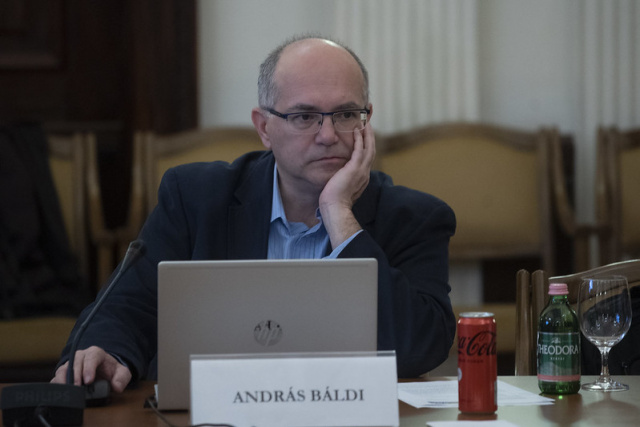 András Báldi at the 2022 Environmental Steering Panel meeting in Budapest Photo: Tamás Szigeti / Hungarian Academy of Sciences
What would you highlight, which EASAC reports had the greatest impact in Europe and Hungary?
I would like to give an example of the latest study on wildfires in 2025, one of the leading authors of which was Orsolya Valkó, Doctor of the Hungarian Academy of Sciences. This has now played a significant role in the EU's activities and materials in this regard, for example an expert meeting with Jessika Roswall, European Commissioner for the Environment, Water Resilience and a Competitive Circular Economy, and the European Commission's Communication on Questions and answers on integrated wildfire risk management of 25 May have taken on board a number of suggestions from the EASAC study. But we can also mention the 2017 study on the sustainability of forests, which remained so topical that EASAC published three additional publications over the years. The scientific article on this topic published in 2019 in GCB Bioenergy was among the top 10 most downloaded articles for three years.
The study on the sustainability of forests highlighted a partly erroneous policy interpretation of the use of wood for biomass. EASAC's Environmental Director was also invited to participate in the expert work of the European Parliament and the UK Government, and the study remained so topical that EASAC issued three additional publications. Comments related to the studies were published in the Forestry Journals in Hungary. Another example is the study on the adverse environmental impacts of deep-sea mining, which contributed to halting the expansion of mining in Norway and to strengthening the protection of the deep sea internationally.
How can member academies most effectively ensure that the messages in the reports reach decision-makers and the broader public?
National academies can help in many areas. The first step is to publish news on their website as soon as an EASAC study becomes public. But in addition, there are plenty of other ways, such as adding domestic examples and connections to present the topic. They can also organize targeted meetings, conferences and an exchange of views with stakeholders. Good quality communication, such as infographics, podcasts or other forms optimised for different media channels, is also important. These are all relatively simple options that academies can take on.
Orsolya Valkó
The Academy is the most trusted institution in Hungary. How does this responsibility translate into the role of the Academy as policy advisor?
The goal of science is multifaceted; besides discovery and scientific knowledge, it is very important to make the knowledge that can help protect our environment or improve the well-being of our society, interpretable and accessible to decision-makers and relevant sectors. The main objective of EASAC is to provide science-based policy advice. This is achieved in several steps. First, scientific topics are selected which are major challenges of our time and where the synthesis and analysis of scientific results can help to develop specific policy proposals. In other words, it focuses on the topics where science can best support policy and where specific results can be expected. The international working groups then jointly review the topic and formulate key policy messages – perhaps this is the most exciting and interesting part of the work. What is very important is that the policy advice does not end with producing the pdf version of the respective study, the working groups and EASAC members also put a strong emphasis on ensuring that the message is truly delivered. The presentation of the studies often includes representatives of the relevant policy field from the EU and is followed by a strong focus on targeted communication and advice across Europe.
 Orsolya Valkó at the 2024 EASAC Changing Wildfires Working Group in Budapest Photo: Tamás Szigeti / Hungarian Academy of Sciences
At what points have EASAC reports and resolutions been channelled into European decision-making? How do you perceive their impact?
I would like to highlight the follow-up to the study “Changing Wildfires”, which is closest to my heart. In the study, we drew attention to the fact that changing fire systems across Europe require completely new thinking, social attitudes and significant policy changes, affecting many areas. Thanks inter alia to our study, following the scientific recommendations of EASAC, the European Commission has adopted proposals to prevent fires and restore habitats, in addition to a mere emergency response. In addition, Ursula von der Leyen announced the creation of a European firefighting hub in Cyprus to strengthen research, training and regional response. In this context, EASAC and the Cyprus Institute jointly organised a related event where the EASAC study was presented. The policy proposals we put forward in our study are hoped to make a real contribution to Europe's ability to prevent catastrophic fires more effectively and to learn to live with new fire systems in a more conscious society.
What does it mean for you personally to participate in EASAC?
This work is a fantastic experience and a great honor. I have participated in two projects so far; I served as the working group leader for the Regenerative Agriculture and Changing Wildfires studies. In each working group 20-30 researchers from different backgrounds and specializations work together, there is a lot to learn from each other. In the "Fire" working group, there were also literally hot professional debates, but this was extremely interesting and instructive and helped to reflect partially divergent professional views in the study, which only improved the outcome. The process of moving from a common synthesis of knowledge to a specific policy proposal is a very exciting scientific journey, and with studies completed, it is very instructive to reflect further on the topic with representatives of different professional sectors, policy and media. I have had a lot of experience and experience in EASAC working groups and I am delighted to have been able to take part in this interesting and useful work.
Bálint Hartmann
What would you highlight, which EASAC reports had the greatest impact in Europe and Hungary? What is the impact of EASAC reports? Is that measurable?
At European level, I would like to highlight the EASAC report on Decarbonization of Buildings, because its findings have been reflected in the documents of both the Commission and the European Parliament. Other key areas of focus include the scientific assessment of the role of forestry bioenergy and hydrogen, which have also been addressed in European Parliament documents. At the same time, the fact that these were multi-year processes clearly illustrates the long-term nature of scientific advisory work in public policy. The most recent examples of such policy engagement are the report on energy security and the commentary emphasizing the need to accelerate the integration of the energy system.
The impact of EASAC can be measured on the basis of formal consultation submissions, Commission and Parliament references and the subsequent policy appearance of the recommendations. In the case of a complex piece of legislation or strategy, it is rarely possible to talk about the exclusive causal effect of a single scientific report. As the process of policy support has also accelerated significantly in recent years, the Energy Steering Panel is also working to introduce new ways of working, prioritising more proactive participation.
 Bálint Hartmann at the joint meeting of EASAC's energy and environmental panels in Budapest in 2018 Photo: Tamás Szigeti / Hungarian Academy of Sciences
Is there a position paper that has been channelled into policy-making in Hungary?
Indirect knowledge transfer takes place in the context of policy making in Hungary. EASAC panellists and experts involved in the preparation of each report are delegated by the Hungarian Academy of Sciences; in the case of ESP, the members of the Scientific Committee on Electrotechnical Engineering and the Scientific Committee on Energy of the Hungarian Academy of Sciences play this role. The same professionals are active participants in the professional-scientific work supporting Hungarian policy, just as the knowledge of the members of the public body of the Academy is at the disposal of the nation and the respective government.
What does it mean for you personally to participate in EASAC?
In the ESP, there is no competition between national positions, and European countries and researchers have their own scientific experience assembled into a common European policy message. As there are no simple answers in the energy sector, the scientific prudence present in EASAC and its honest handling is a very positive experience. We do not have to produce political slogans, but we do evidence-based professional-scientific advice, which can also be used in decision-making.
The most important reports prepared in cooperation with the Hungarian Academy of Sciences
Multi-functionality and sustainability in the European Union’s forests (April 2017)
- Sustainable forest management. Réka Aszalós from the Institute of Ecology and Botany of the Centre for Ecological Research took part in the high-impact study.
Valuing dedicated storage in electricity grids (May 2017)
- The importance of electricity storage. The annual meeting of EASAC's management bodies in the field of energy science and environment was organised by the Hungarian Academy of Sciences in Budapest from 23 to 25 April 2018. In addition to discussing previously published resolutions, the other main objective was to strengthen the cooperation of the working groups examining different topics. László Lovász, President of the Hungarian Academy of Sciences emphasized in his welcome speech the importance of the resolutions of the organization, which the Hungarian Academy of Sciences also uses as a source for its publications.
Homeopathic products and practices: assessing the evidence and ensuring consistency in regulating medical claims in the EU (20 September 2017)
- In response to and on the basis of this report, the Medical Sciences Department of the Hungarian Academy of Sciences issued a resolution entitled Principles of Evidence-Based Medicine and Complementary Procedures, adopted at its meeting on 20 June 2018. It states: it is essential that the therapeutic results are scientifically proven also in the case of complementary procedures (‘alternative medicine’). According to the Medical Sciences Department of the Hungarian Academy of Sciences, ‘carrying out unevidenced medicine can pose a serious risk to patients’. The unit agreed with EASAC’s view that “in the case of homeopathy, there is no evidence that homeopathy is a more effective therapy than placebo. On this basis, homeopathy cannot be considered as part of complementary medicine’.
Traditional Chinese Medicine – A Statement by EASAC and FEAM (November 2019)
- European academies of science and medicine responded to the World Health Organization's decision to include traditional Chinese medicine in their diagnostic coding system. In its 2018 resolution, the Medical Sciences Department of the Hungarian Academy of Sciences laid down its general principles for the assessment of complementary medicine. "In line with the current EASAC and FEAM position paper, we consider it important to settle complementary medical procedures, including the domestic legal regulation of traditional Chinese medicine, as soon as possible", said György Kosztolányi, President of the Medical Sciences Department of the Hungarian Academy of Sciences, in response to a question from mta.hu. Shortly after the publication of the resolution of the European academies, the Ministry of Human Resources submitted a bill that tightens the framework for the provision of health services.
Challenges and potential in regenerative medicine (June 2020)
- In a joint report, EASAC and FEAM analyzed the state of play of regenerative medical procedures in the European Union. Tamás Masszi, hematologist of the Department of Internal Medicine and Hematology of Semmelweis University also took part in the preparation of the document.
Regenerative agriculture in Europe (April 2022)
- Regenerative agriculture in Europe. EASAC’s report was presented at the Hungarian Academy of Sciences on 6 April 2022. The EASAC working group on regenerative agriculture was co-chaired by Orsolya Valkó, scientific advisor at the Institute of Ecology and Botany at the HUN-REN Centre for Ecological Research. The video recording of the presentation is at 414 views.
Neonicotinoids and their substitutes in sustainable pest control (February 2023)
- Neonicotinoids and their replacement in integrated pest management. The report was presented at the Hungarian Academy of Sciences on 29 March 2023. András Székács, Doctor of the Hungarian Academy of Sciences, was a member of the expert group compiling the report, while László Hornok, full member of the Hungarian Academy of Sciences, was one of its peer reviewers.
The Future of Gas (May 2023)
- Report on the future of natural gas. The report was prepared by the EASAC Energy Panel. As a representative of the Hungarian Academy of Sciences, Dr. Attila Imre, Doctor of the Hungarian Academy of Sciences, head of department at the Department of Energetic Machines and Systems of the Budapest University of Technology and Economics took part in the work of the working group preparing the report.
Changing Wildfires – Policy Options for a Fire-literate and Fire-adapted Europe (May 2025)
- Variable wildfires: policy options for a fire-conscious and fire-adapted Europe. Orsolya Valkó, scientific advisor of the HUN-REN Centre for Ecological Research was one of the leaders of the 22-member international working group working on the study.
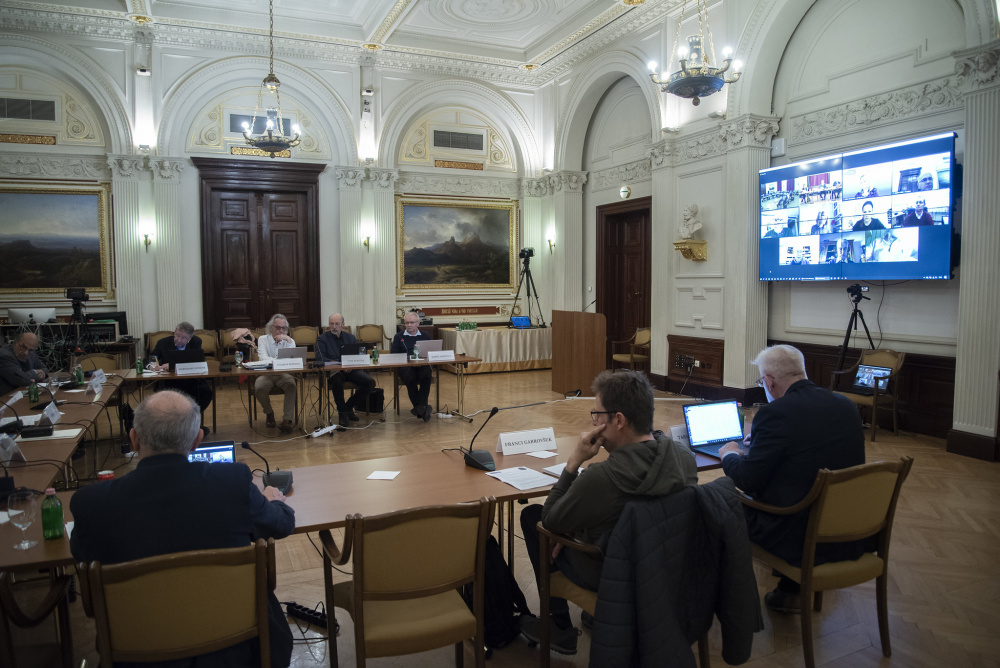 Environment Steering Panel meeting at the MTA headquarters in 2022 Photo: Tamás Szigeti / Hungarian Academy of Sciences
Previously published articles on the website of the Hungarian Academy of Sciences about EASAC resolutions can be found here. Further EASAC publications can be found on the organization’s website.
A témához kapcsolódó cikkeink

EASAC: Restoring Europe’s natural habitats would deliver a tenfold return on investment
The European Academies Science Advisory Council (EASAC) has presented its official scientific opinion on the European Union’s Nature Restoration Regulation. According to EASAC’s professional commentary, restoring nature and halting biodiversity loss are among the most important tools for mitigating the harmful effects of climate change, which can be measured in hundreds of billions of euros. The implementation of EU directives at the national level represents a strategic investment that will pay off handsomely in terms of the security, well-being, health, ecological stability and economic resilience of Member States. For this reason, the full implementation of the EU Nature Restoration Regulation is not merely a legal obligation.
Building trust and timeliness in science advice: Professor Wim van Saarloos on strengthening the bridge between research and policy
Professor Wim van Saarloos, physicist and former president of the Royal Netherlands Academy of Arts and Sciences, has long grappled with how to make scientific advice more effective. The professor sat down with the Hungarian Academy of Sciences (MTA) at its 200th anniversary celebration and international conference in Budapest on 4 November to discuss this and other topics relevant to European science policy today. As President of the European Academies Science Advisory Council (EASAC), he emphasised that bridging the gap between research and political decision-making requires foresight, focus and constant adaptation.
EASAC Council meets in Budapest as Hungary prepares for the upcoming presidency of the Council of the European Union
The Hungarian Academy of Sciences (MTA) hosted the Council Meeting of the European Academies’ Science Advisory Council (EASAC) in Budapest on 6 and 7 June 2024.
EASAC’s Report on the Future of Gas
Natural gas is not cleaner than other fossil fuels, and using it instead of coal or oil would lead to little or no reduction in greenhouse gas effects, concludes the European Academies’ Science Advisory Council (EASAC) in its recently published report “The Future of Gas”. In the EASAC working group preparing the document, the Hungarian Academy of Sciences was represented by Professor Attila Imre, Doctor of MTA, and Head of Department of Energy Engineering in the Faculty of Mechanical Engineering at the Budapest University of Technology and Economics (BME).
EASAC’s New Report on Neonicotinoids presented at the Headquarters of the Hungarian Academy of Sciences
As a follow-up to its initial report on the subject in 2015, the European Academies Science Advisory Council (EASAC) has just published its second report on the agricultural use of the group of pesticides known as neonicotinoids. The public event presenting this latest report took place at the Hungarian Academy of Sciences on 29 March 2023. Should we allow the use of these substances in sustainable farming? Do they have anything to do with the loss of pollinators? Is there a role for this group of chemicals in Europe in the future? Here is a summary of the event which addressed all these questions, together with a link to the video recording.