


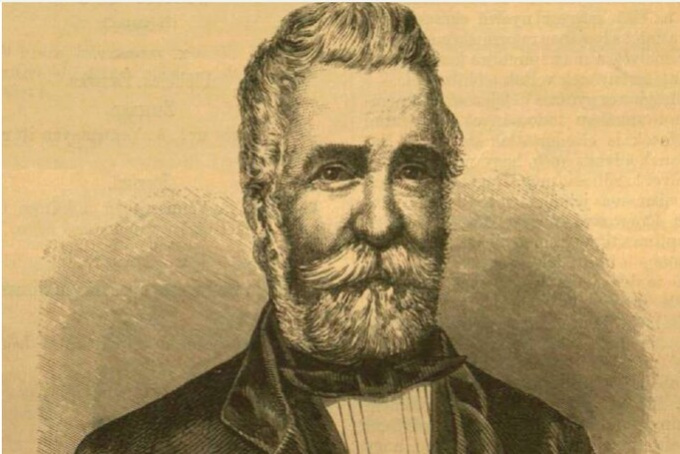
Boundless history: 1841 - The Hungarian Society of Natural Sciences is founded on the initiative of physician and academician Pál Bugát
On 5 May 2025, as the opening event of the 199th Ceremonial General Assembly of the Hungarian Academy of Sciences, the public artwork titled The Boundless History was unveiled. The installation was commissioned by the Hungarian Academy of Sciences and the Municipality of Budapest to mark the 200th anniversary of the Academy’s founding. In this series, we highlight key events featured on the timeline composed of 200 slabs of Tardos limestone.
MORE
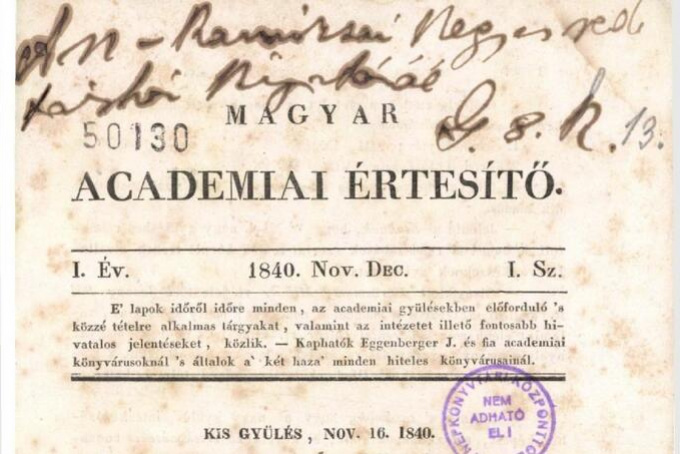
Boundless history: 1840 – The first issue of Magyar Academiai Értesítő, the official gazette of the Hungarian Learned Society, is published
On 5 May 2025, as the opening event of the 199th Ceremonial General Assembly of the Hungarian Academy of Sciences, the public artwork titled The Boundless History was unveiled. The installation was commissioned by the Hungarian Academy of Sciences and the Municipality of Budapest to mark the 200th anniversary of the Academy’s founding. In this series, we highlight key events featured on the timeline composed of 200 slabs of Tardos limestone.
MORE


Boundless history: 1835: Academy member Sándor Kőrösi Csoma sends fifty copies of his Tibetan–English dictionary to the Academy
On 5 May 2025, as the opening event of the 199th Ceremonial General Assembly of the Hungarian Academy of Sciences, the public artwork titled The Boundless History was unveiled. The installation was commissioned by the Hungarian Academy of Sciences and the Municipality of Budapest to mark the 200th anniversary of the Academy’s founding. In this series, we highlight key events featured on the timeline composed of 200 slabs of Tardos limestone.
MORE
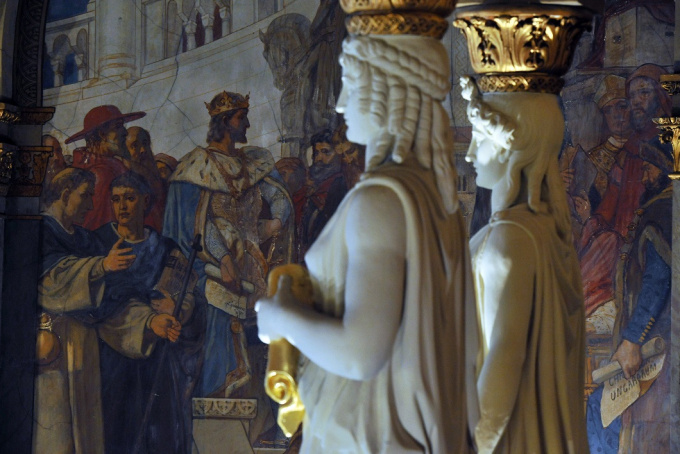
A unified Hungarian research network under the Hungarian Academy of Sciences (MTA) could be established as early as October – Joint press release from the Ministry of Science and Technology and MTA
On 14 July, the leadership of the Ministry of Science and Technology and the Hungarian Academy of Sciences met at the Academy’s headquarters to discuss the establishment of a unified Hungarian research institute network and a proposed timetable for its implementation. Based on both the previous and latest round of discussions, the Ministry will draft legislation for the reorganisation and submit it for public comment in early September. The legislation is scheduled to take effect by the end of October, which means that the research network – which was separated from the Academy in 2019 – could be reunited with MTA before the end of this year.
MORE
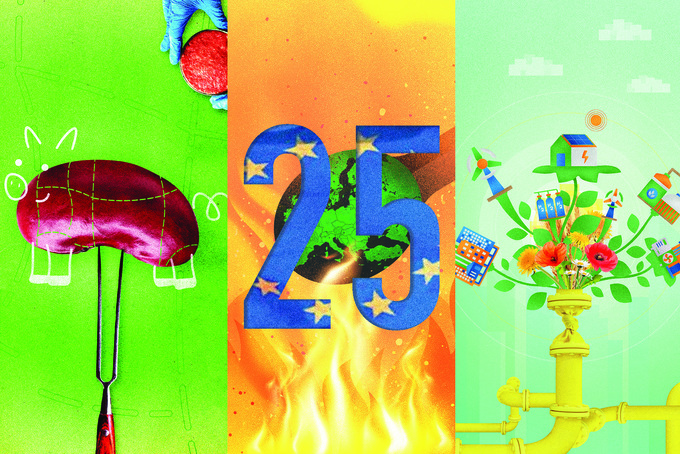
EASAC, the Leading Advisory Body of Europe’s Scientific Academies, Marks its 25th Anniversary
On 11 June 2001, the European Academies Science Advisory Council (EASAC), was established by the academies and academic organisations of the European Union to provide policy-makers with jointly formulated, science-based, unified and independent expert advice. The Hungarian Academy of Sciences joined EASAC in 2004, following Hungary's accession to the EU, enabling Hungarian researchers to make their voice heard on the most pressing policy issues together with European scientists.
MORE
Meeting of the Visegrad Group Academies at Smolenice Castle
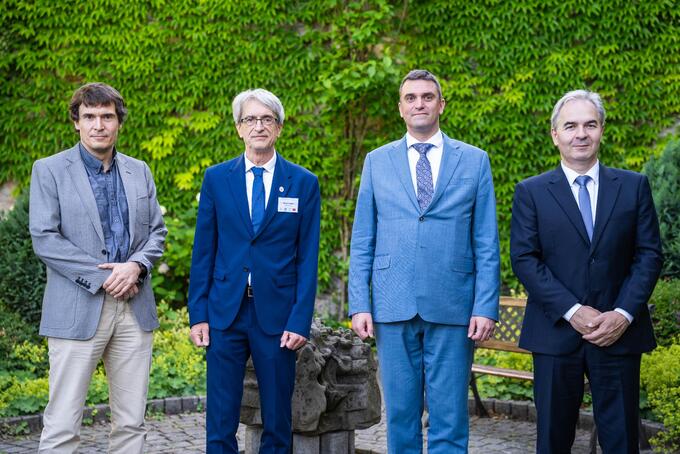
The annual forum of the academies of sciences of the Visegrad Group (V4) countries was held in Smolenice, Slovakia on 17-18 June 2026, bringing together representatives from the Czech, Hungarian, Polish and Slovak national academies of sciences.
MORE
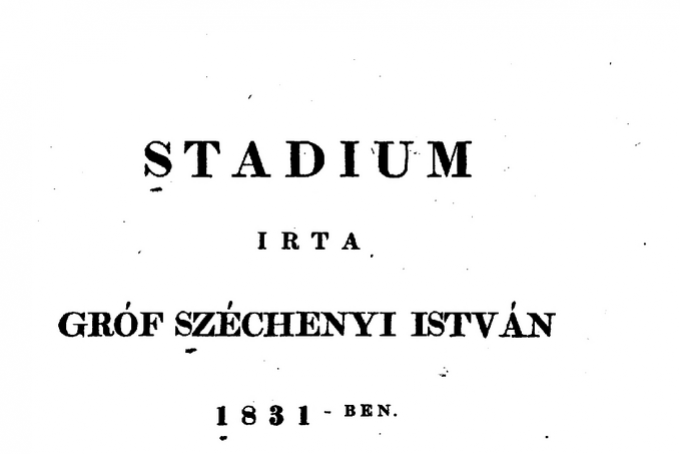
Boundless History:1833 – Count István Széchenyi’s work Stadium, a summary of his reform plans, is published and dedicated to the nation’s legislators
On 5 May 2025, as the opening event of the 199th Ceremonial General Assembly of the Hungarian Academy of Sciences, the public artwork titled The Boundless History was unveiled. The installation was commissioned by the Hungarian Academy of Sciences and the Municipality of Budapest to mark the 200th anniversary of the Academy’s founding. In this series, we highlight key events featured on the timeline composed of 200 slabs of Tardos limestone.
MORE
_680_454_1779092518_680_454_1782112807_fill_270x180.jpg)
_680_454_1779092518_680_454_1782112807_fill_680x454.jpg)
Featured Lendület Researcher: Karolina Lendák-Kabók
Karolina Lendák-Kabók, a lecturer in the Department of Minority Studies, Faculty of Social Sciences, at Eötvös Loránd University (ELTE), has been researching ethnic groups living in Vojvodina and mixed marriages for many years. She first examined the topic as a Marie Skłodowska-Curie postdoctoral fellow, before placing it in a broader regional context: with the support of the János Bolyai Research Fellowship, she analysed mixed Hungarian–Serbian families in Hungary and mixed Hungarian–Serbian families in Serbia. In her current research project, funded by the Lendület (Momentum) Programme, she is exploring the subject from a historical perspective.
MORE
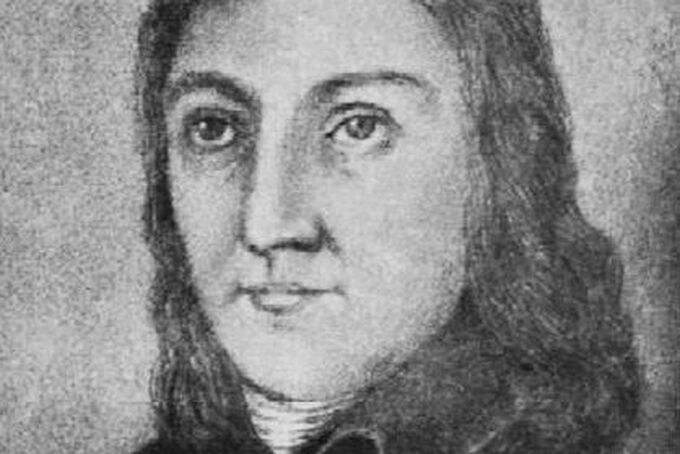
Boundless History: 1832 – Publication of the principal work of mathematician and Academy member Farkas Bolyai, Tentamen, as well as the work of his son, János Bolyai, entitled Appendix
On 5 May 2025, as the opening event of the 199th Ceremonial General Assembly of the Hungarian Academy of Sciences, the public artwork titled The Boundless History was unveiled. The installation was commissioned by the Hungarian Academy of Sciences and the Municipality of Budapest to mark the 200th anniversary of the Academy’s founding. In this series, we highlight key events featured on the timeline composed of 200 slabs of Tardos limestone.
MORE
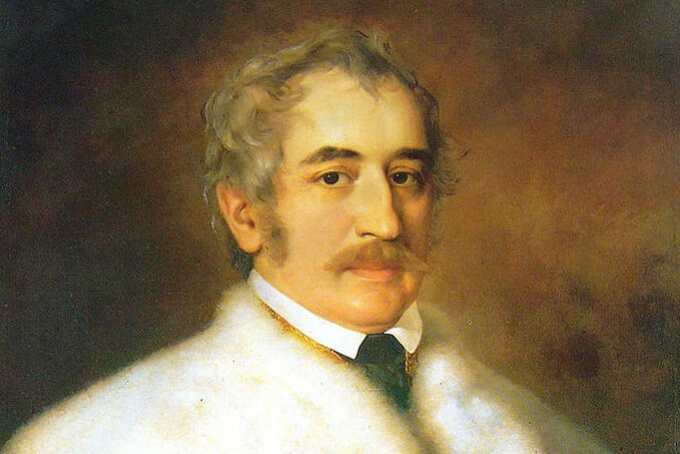
Boundless History: 1826 – Count József Teleki donates his family library “for the use of the Learned Society and all citizens of the nation”
On 5 May 2025, as the opening event of the 199th Ceremonial General Assembly of the Hungarian Academy of Sciences, the public artwork titled The Boundless History was unveiled. The installation was commissioned by the Hungarian Academy of Sciences and the Municipality of Budapest to mark the 200th anniversary of the Academy’s founding. In this series, we highlight key events featured on the timeline composed of 200 slabs of Tardos limestone.
MORE


Boundless History: 1831 – The Hungarian Learned Society adopts the motto “Sunshine After Rain”. The institution’s first General Assembly
On 5 May 2025, as the opening event of the 199th Ceremonial General Assembly of the Hungarian Academy of Sciences, the public artwork titled The Boundless History was unveiled. The installation was commissioned by the Hungarian Academy of Sciences and the Municipality of Budapest to mark the 200th anniversary of the Academy’s founding. In this series, we highlight key events featured on the timeline composed of 200 slabs of Tardos limestone.
MORE


Boundless History: 1825 – Count István Széchenyi’s donation to the National Assembly for the establishment of the Hungarian Learned Society
On 5 May 2025, as the opening event of the 199th Ceremonial General Assembly of the Hungarian Academy of Sciences, the public artwork titled The Boundless History was unveiled. The installation was commissioned by the Hungarian Academy of Sciences and the Municipality of Budapest to mark the 200th anniversary of the Academy’s founding. In this series, we highlight key events featured on the timeline composed of 200 slabs of Tardos limestone.
MORE
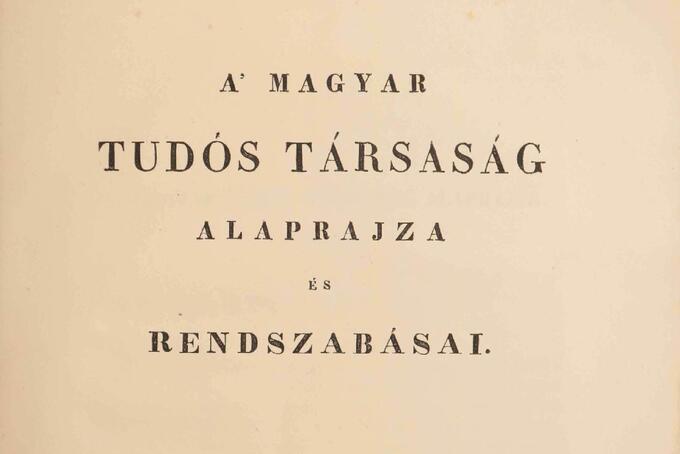
Boundless History: 1827 – Law on the establishment of a learned society or Hungarian academy for the cultivation of the national language
On 5 May 2025, as the opening event of the 199th Ceremonial General Assembly of the Hungarian Academy of Sciences, the public artwork titled The Boundless History was unveiled. The installation was commissioned by the Hungarian Academy of Sciences and the Municipality of Budapest to mark the 200th anniversary of the Academy’s founding. In this series, we highlight key events featured on the timeline composed of 200 slabs of Tardos limestone.
MORE
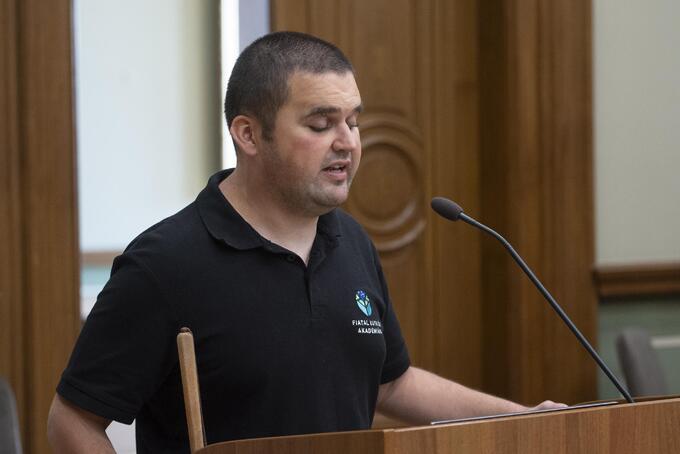
Featured Lendület Researcher: Boldizsár Szentgáli-Tóth
Artificial intelligence (AI) is making its presence felt in every aspect of life, and this trend is only expected to accelerate in the future. The legal profession is no exception, though alongside new opportunities, AI may also entail significant risks. For this reason, the legal profession must prepare now for the challenges posed by AI. This goal underpins the research conducted by Boldizsár Szentgáli-Tóth, senior research fellow at the Institute for Legal Studies of the ELTE Centre for Social Sciences, researcher at the National University of Public Service, and adjunct lecturer at Eötvös Loránd University, together with his colleagues. Their work has received support through the Lendület (Momentum) Programme.
MORE


Results of the Second Call of the Momentum MSCA Programme
The Momentum MSCA Premium Postdoctoral Fellowship Programme, coordinated by the Hungarian Academy of Sciences, has launched its call for applications for the second time, inviting international postdoctoral researchers to pursue independent research projects in Hungary. By joining established Lendület (Momentum) research groups, fellows develop professionally, acquire new skills and gain international experience, whilst also contributing to scientific excellence and broader research collaboration in Hungary.
MORE


The new leaders of the Hungarian Academy of Sciences
At its 200th general assembly held on Tuesday, the Hungarian Academy of Sciences elected Mihály Pósfai as the 22nd president of the Academy, which was founded in 1825. The Academy’s highest decision-making body also elected Gábor Kecskeméti as secretary general and Ilona Kovács as deputy secretary general. The Hungarian Academy of Sciences, which celebrated the bicentennial of its founding last year, elected a new president, secretary general, deputy secretary general, vice presidents, and members of the Presidium because the terms of the current officers are expiring. The elected leaders will take office on 1 June 2026.
MORE


Featured Lendület Researcher: Szilvia Zita Tóth
Szilvia Zita Tóth, Director of the Institute of Plant Biology at the HUN-REN Biological Research Centre in Szeged and Head of the Laboratory for Molecular Photobioenergetics, is now conducting research on the hydrogen-producing capacity of green algae in her second Momentum (Lendület) grant project. This capacity may be harnessed for human energy generation in the future. In the long term, it may even become possible to utilise the direct electrical current production of algae. This would enable energy to be generated without the emission of greenhouse gases, while the algae would also absorb carbon dioxide through photosynthesis. In addition, the biomass of the algae could also be utilised.
MORE
_680_454_1773830811_fill_270x180.jpg)
_680_454_1773830811_fill_680x454.jpg)
Featured Lendület Researcher: Balázs Reizer
Hungarian workers still earn significantly less than their Western counterparts. In order for this situation to change, it is essential to uncover the underlying causes of this phenomenon. This is the task undertaken by Balázs Reizer, Senior Research Fellow at the ELTE Centre for Economic and Regional Studies and Head of the Momentum Technology and Inequality Research Group, together with his colleagues. With his team, he is investigating what Hungarian workers actually do during their working hours and how the innovative transformation and robotisation of production affect workers in different job roles.
MORE


Hungarian Academy of Sciences: Supporting women’s advancement through targeted grants
On 11 February 2026, the International Science Council (ISC), in collaboration with the InterAcademy Partnership (IAP) and the Standing Committee for Gender Equality in Science (SCGES), published the report “Towards Gender Equality in Scientific Organisations: Assessment and Recommendations”. It offers the most comprehensive global review to date of gender equality in scientific organisations.
MORE
_680_454_1764597338_fill_270x180.jpg)
_680_454_1764597338_fill_680x454.jpg)
Featured Lendület Researcher: Edit Mátyus
Although quantum electrodynamics is considered a well-established theory in physics, in chemistry – in the world of atoms and molecules – it still raises a number of unresolved questions. Edit Mátyus, Doctor of the Hungarian Academy of Sciences, Professor in the Department of Physical Chemistry at Eötvös Loránd University, and head of the Molecular Quantum Electrodynamics Research Group, and her colleagues are attempting to answer these questions with the support of the Momentum Programme.
MORE
- 474 results